What Is Sparkplug B? The MQTT Standard Behind the Unified Namespace
Sparkplug B is the specification built on MQTT that adds structure and context to industrial data — the foundation of a real Unified Namespace architecture.


Hassle-free automation?
Checklist: 10 Steps to Digitize Your Plant
Avoid costly implementation errors
What is Sparkplug B? #
Sparkplug B is an open specification built on top of MQTT that standardizes how industrial devices publish their state: it defines a fixed topic structure, encodes data in Protobuf instead of text JSON, and adds connection-state handling through birth/death certificates. It is the missing piece that lets plain MQTT support a real Unified Namespace architecture, instead of every integrator inventing its own payload format.
The scaling problem with OPC UA #
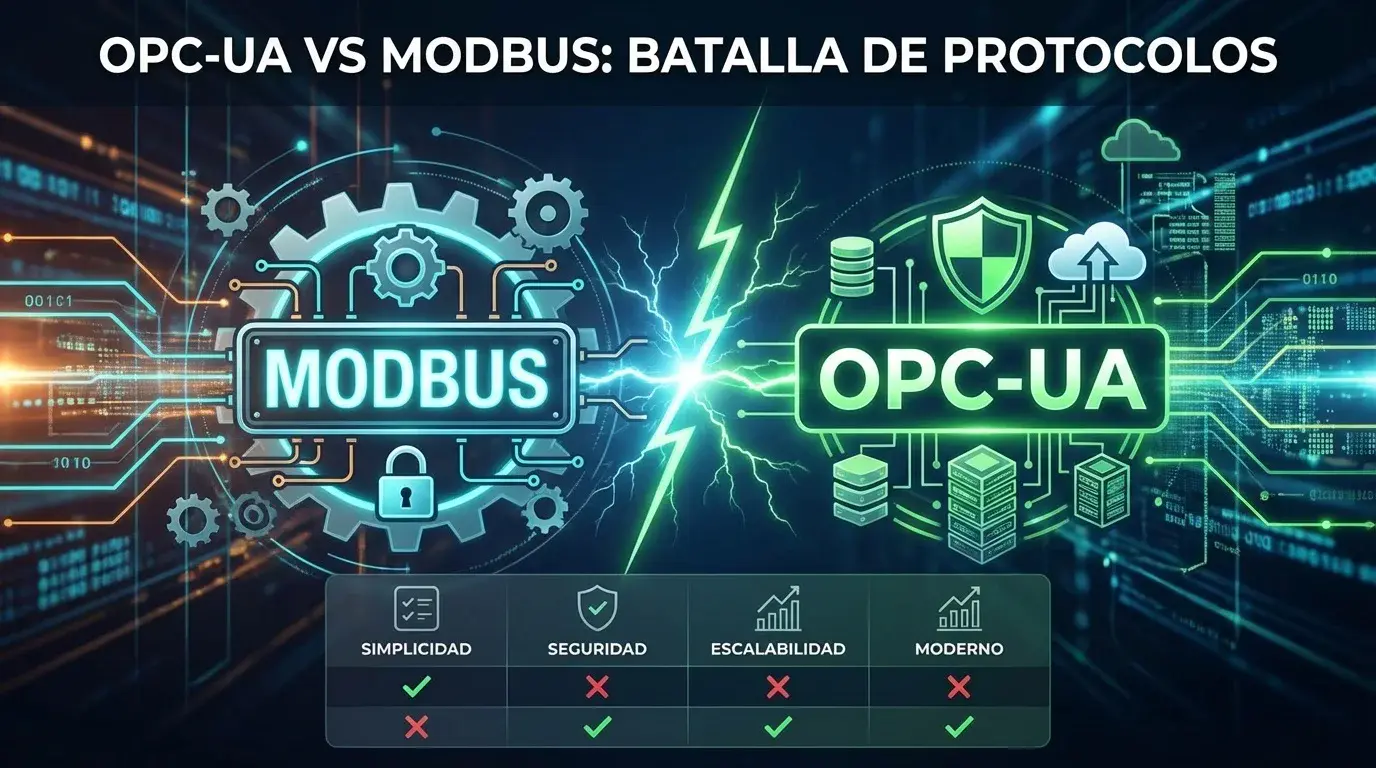
OPC UA (Unified Architecture) is excellent. It is secure, semantic and standard. But it has one fatal flaw in the age of big data: it works on a client-server (request-response) model.
Imagine 1,000 sensors. With OPC UA your SCADA has to constantly ask each one: "any new data?". That generates brutal network traffic and couples the systems together. If the SCADA goes down, nobody sees anything.
Move beyond restrictive licensing
See why iGromi OS is a modern alternative to legacy SCADA and MES systems.
The New Standard: Edge AI
The industry no longer buys expensive per-tag licences or depends on slow clouds. Modern plants process data locally at < 5ms with full autonomy, even with no internet.
View Architecture MatrixEnter MQTT: report by exception #
MQTT works on publish/subscribe. Sensors (publishers) only send data when SOMETHING CHANGES. If temperature is steady, the network stays silent. This cuts bandwidth consumption by as much as 95%.
So what is MQTT missing? Context. (This is where Sparkplug B comes in) #
Plain MQTT is payload-agnostic. You can send JSON, XML or a photo of a cat. The subscriber has no idea what "45.2" means. Temperature? Pressure? Speed?
Sparkplug B is a specification built ON TOP of MQTT that defines:
- A standard topic structure:
spBv1.0/Group/Node/Device. - Efficient encoding: It uses Google Protobufs instead of text JSON, compressing the payload further.
- State management: The concept of a birth certificate and a death certificate. When a device connects, it sends its full definition. When it disconnects abruptly (power cut), the broker tells everyone "device X has died", thanks to the Last Will and Testament (LWT) message.
What is a Unified Namespace (UNS)? #
A Unified Namespace is an architecture where the MQTT broker, speaking Sparkplug B, is the centre of the plant's data universe: the ERP subscribes to production data, the MES publishes work orders, the PLC publishes machine states — everyone reading and writing the same place instead of point-to-point integrations.
All decoupled. You can restart the ERP and the plant keeps producing and publishing. It is the definitive architecture for resilience.
Does a Unified Namespace replace an industrial Data Lake? #
No — they solve different problems. A Data Lake is a repository that accumulates raw data to analyze later: great for historians, machine learning and long-term reporting, but with minutes or hours of latency. A Unified Namespace delivers the data as it happens, so SCADA, MES and alerts can act on it in real time.
In practice they're not competitors: the UNS is the plant's live source of truth, and one of its subscribers can be the very Data Lake that archives that same stream for historical analysis.