Engine · edge · app
The iGromi engine: the industrial AI platform that understands your plant
Reads the plant and keeps going offline
- Sensors, Modbus, PLCs, MQTT and cameras
- Offline it stores; back online, it sends what it kept
- Web OS with the plant app suite
- Node-RED for local automations
Industrial computer in the plant
Ontology, rules, memory and agents
- Ontology: what each asset, zone and process is
- Rules and indicators traced back to the data
- Knowledge with authority, validity and access level
- Agents that propose; a person approves
Server or VM: shared, your own or wherever you say
For whoever is out on the floor
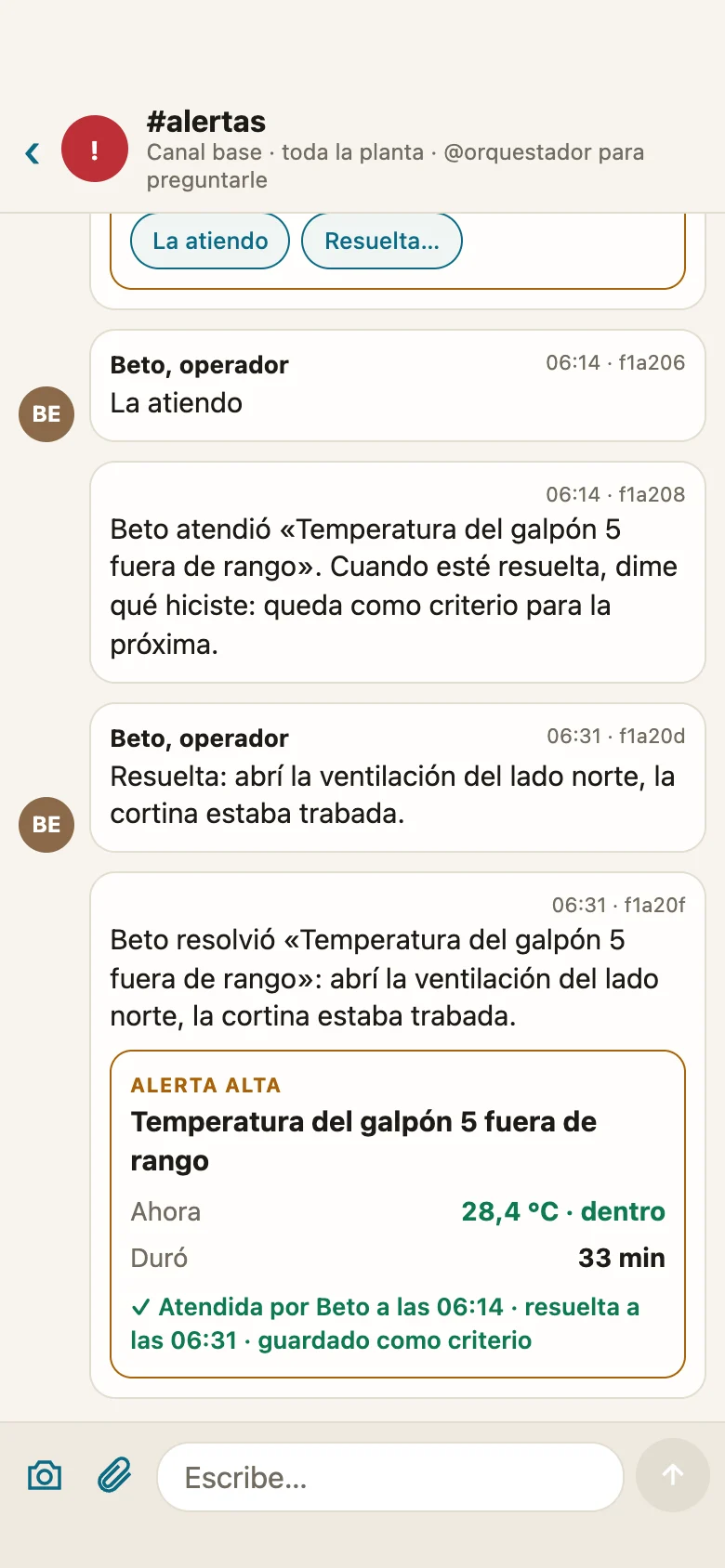
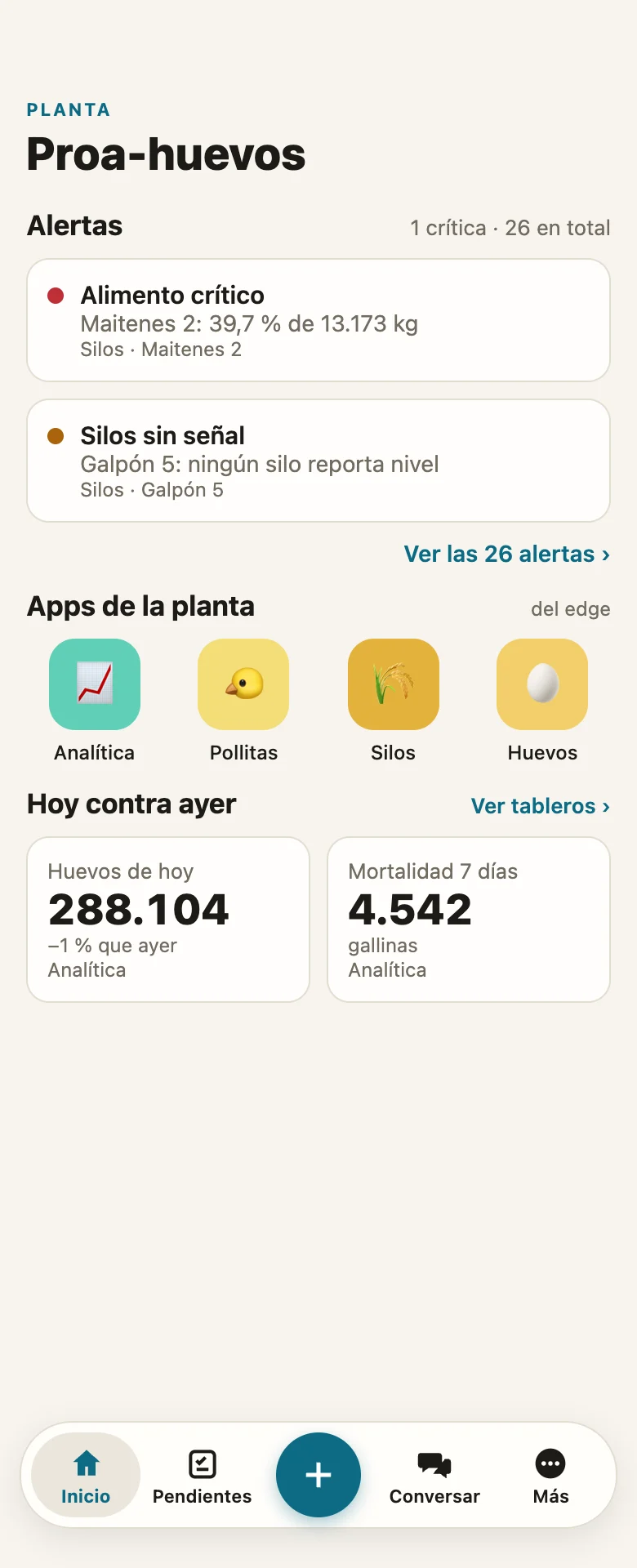
- Alerts in sight when you open it
- Chat: the team and the Orchestrator in one thread
- Your plant’s apps for your role
- Notifications without third-party services
iPhone and Android · early access
What the engine knows · ontology
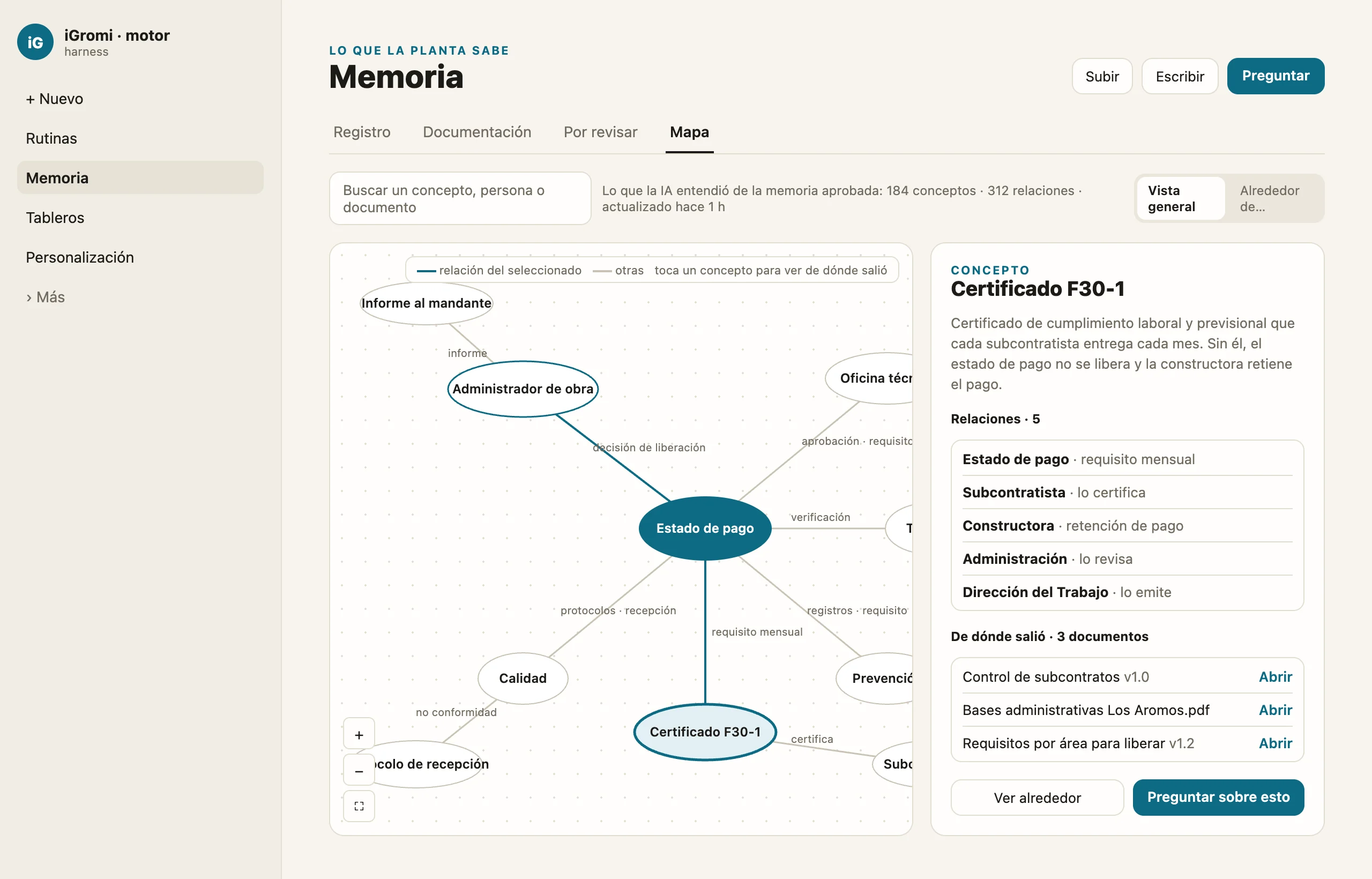
An industrial ontology: what each thing is and how it chains together.
The engine doesn’t keep loose numbers. It knows what each asset, zone and process is, and how they relate.
- Each concept with its relations and the documents it came from.
- Built from approved memory, not from whatever the model comes up with.
- Tap a concept and ask about it.
What the engine knows · knowledge
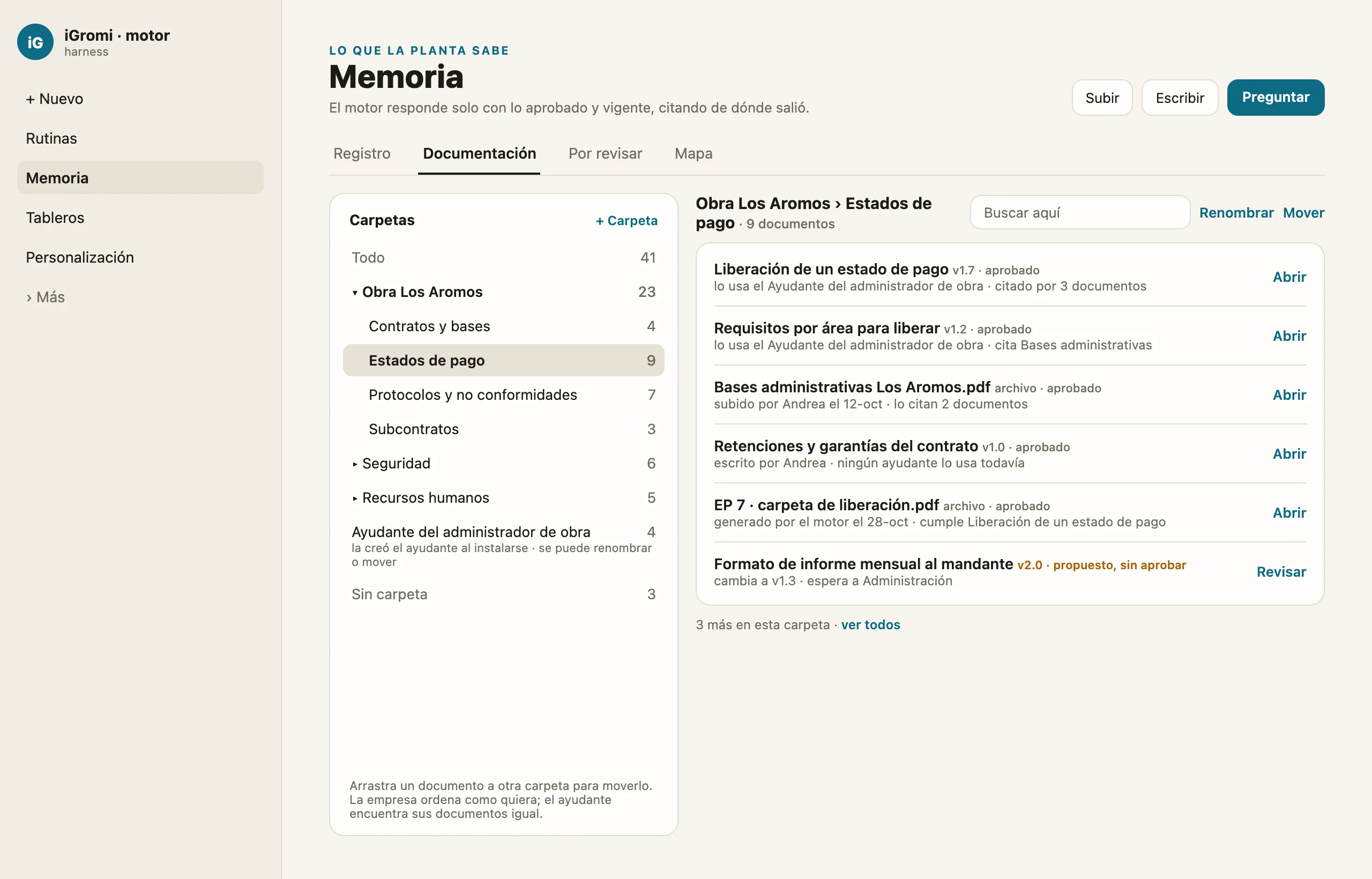
Knowledge with authority, validity and access level.
An authorised protocol outweighs an observation. The engine answers only with what is approved and current, and cites where it came from.
- Each document with version, status and validity.
- Proposals wait for review before they count.
- Access level per document: everyone sees what’s theirs.
How a data point travels
From the sensor to a decision, in four steps.
- 01
It’s read
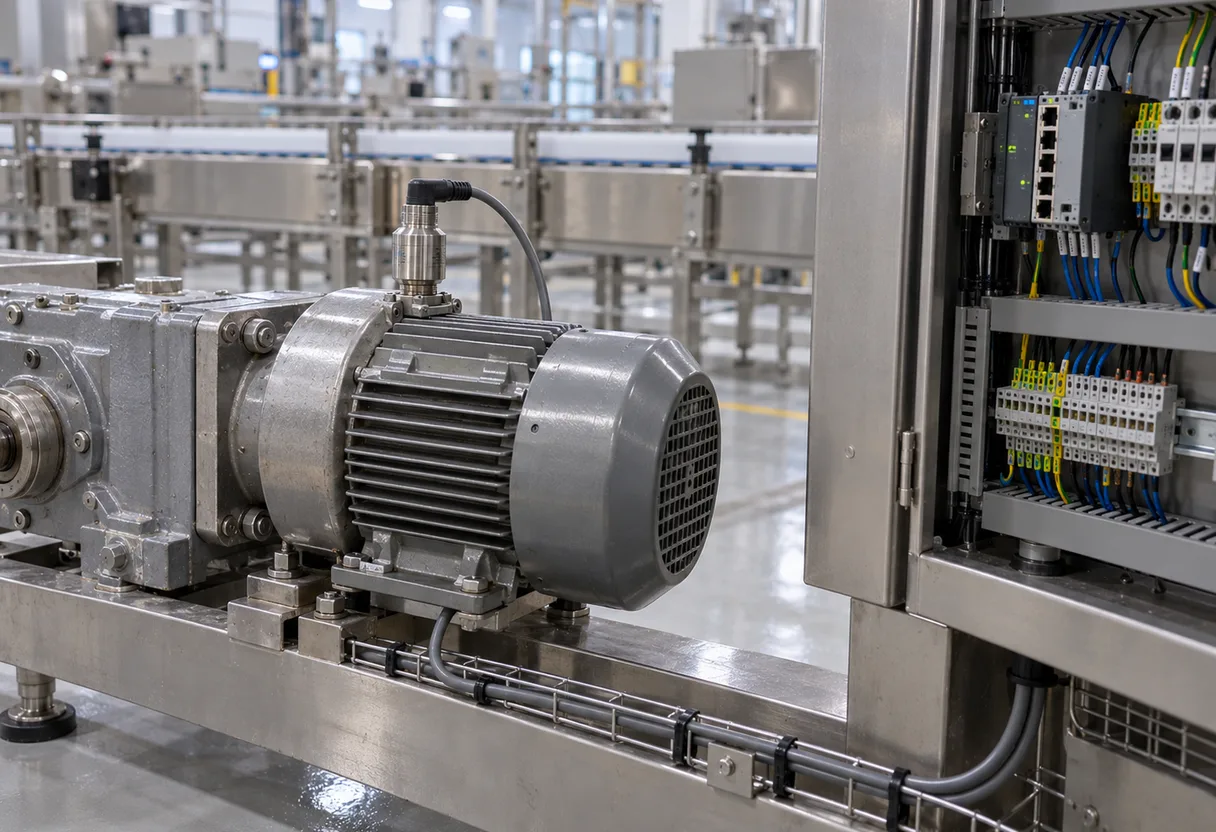
The sensor delivers a number. The edge stores it and tags its quality: if it’s outside the physical range of that variable, it’s flagged and doesn’t feed indicators.
 M204_I_A · 7,8 AQuality: within physical rangeStored on the edge · 10:42
Step 1 · the edge in the plant - 02
It’s understood
The engine resolves which asset that tag belongs to and what it means in the process chain. It stops being a loose number.
- 03
It’s evaluated
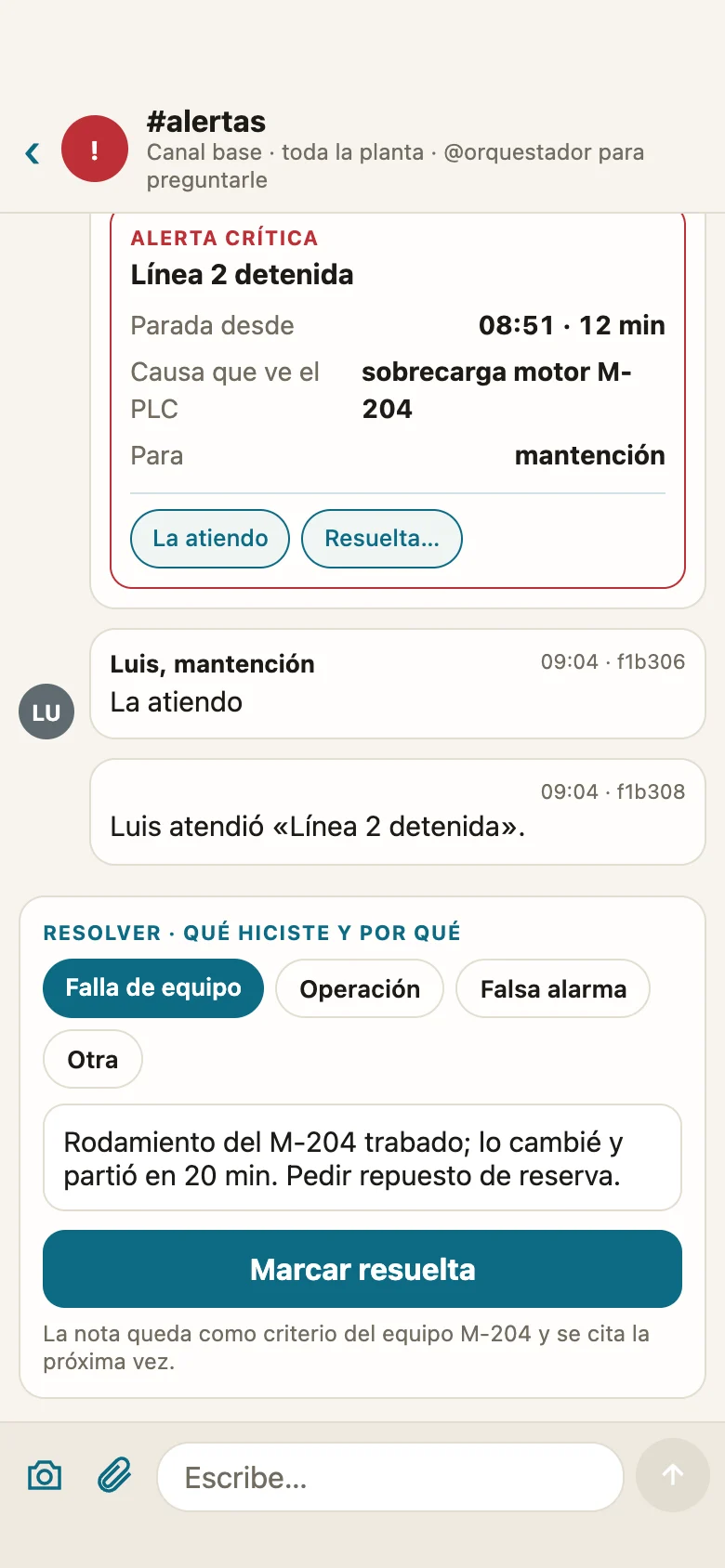
Rules open an alert when they should. It’s born deterministic: you can rebuild why it fired without asking a model.
Example data - 04
It’s decided
Someone acts, and the decision is kept as a fact with its reason. The engine checks it before proposing the same thing again.
Example data
The rule that runs through everything
The engine proposes and measures. A person approves.
It records who approved, when and on what evidence. The edge reads the PLC read-only: no machine moves on its own.
A system that decides on its own is a system nobody is accountable for.
4.1 mm/s · above normal since 10:02
AI harness
The industrial AI harness.
A harness is the layer that wraps an AI model so it can work as an agent. iGromi’s is the engine: it gives any model your plant’s ontology, your rules, your approved memory, permissioned tools and a person who approves.
- The model is swapped; the harness keeps what your plant knows.
- It is what makes AI useful and safe in a plant.
- We mean the AI software harness, not a safety harness or a wiring harness.
- Ontology
- Rules
- Authoritative memory
- Tools
- Permissions
- Human approval
The edge suite
Sixteen apps on the edge Web OS. Install the ones you use.
They install from the Store as each plant needs. All talk to the engine the same way: they produce facts and ask for approval when it’s time to act. A new app doesn’t require touching the engine.
- Energyfrom the Store
- Waterfrom the Store
- Climatefrom the Store
- Maintenancefrom the Store
- Productionfrom the Store
- MESfrom the Store
- Formscoming soon
- Documentsfrom the Store
- Datafrom the Store
- Visionfrom the Store
- GPSfrom the Store
- Platesfrom the Store
- Silosfrom the Store
- Simulationfrom the Store
- Multimediafrom the Store
- Messagingfrom the Store
Helpers per role
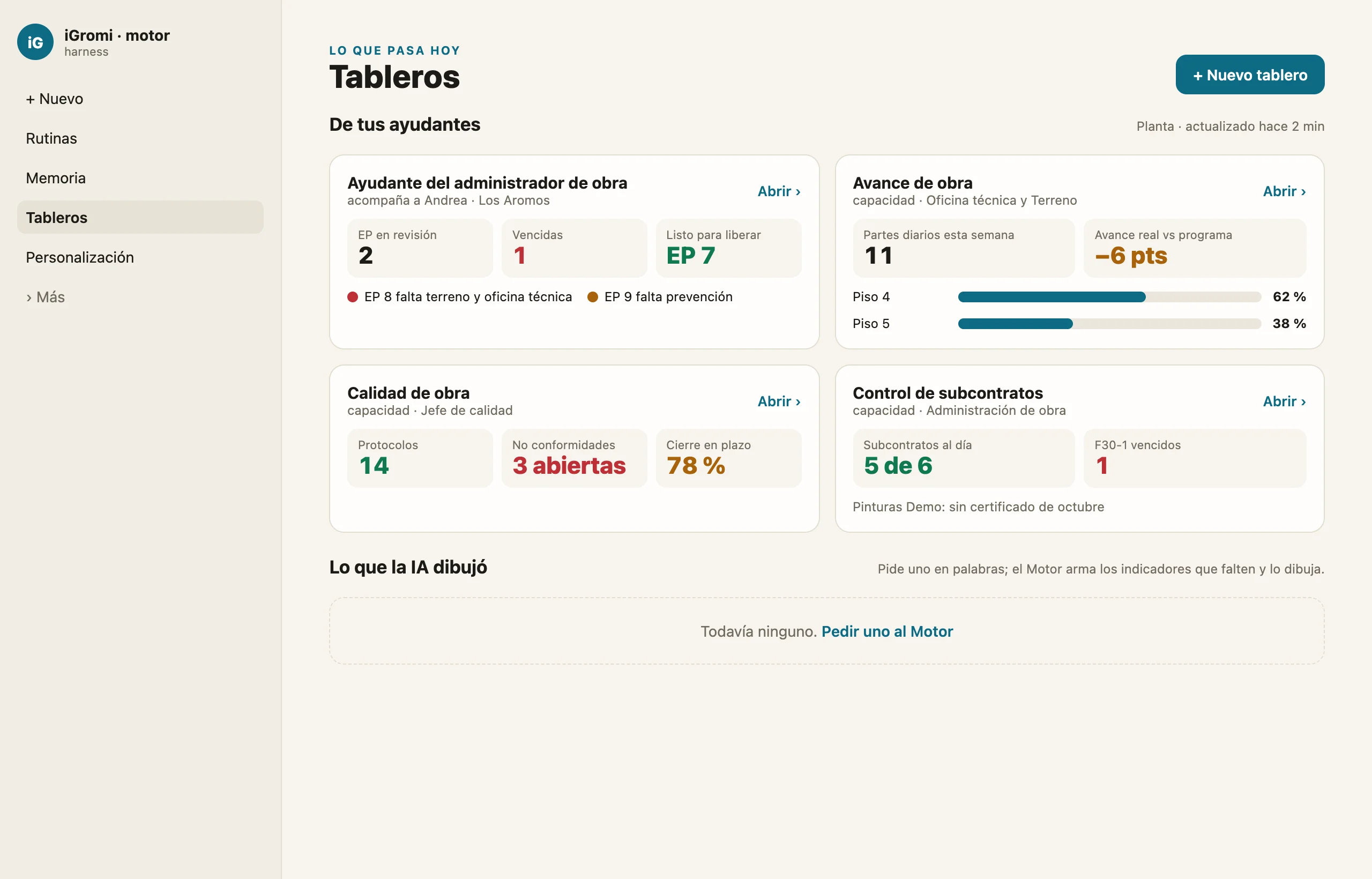
AI agents that propose, each with its own board.
Each helper works alongside a role: it watches its indicators, flags what’s due and proposes what’s next. It never releases or executes on its own.
- The role’s indicators, current and with their source.
- Proposed tasks a person accepts or dismisses.
- Adjusts to your company’s rules.
Learns · under construction
It learns how your plant behaves, hour by hour.
The engine builds a baseline per measuring point and per hour, and proposes thresholds backed by history before applying them. A person approves them.
The mechanism is built; it’s gathering the history it needs.
Where the engine runs
From free to your own, without starting over.
You start on the shared engine. When you want your own, everything moves in full and is verified before the move is signed off.
Security and where your data lives at data sovereignty.
- 01 · Free
iGromi’s shared engine, with an isolated space per company. Nothing to install.
- 02 · Premium
Your engine on a machine of your own.
- 03 · Enterprise
Your engine wherever you say: your cloud or your plant.
FAQ
What people ask about the engine
What is the iGromi engine?
What is an industrial AI harness?
What do AI agents do in the engine?
What is an industrial ontology?
Can the engine change a PLC parameter?
What happens if the plant loses internet?
Which AI model does the engine use?
Does my data train other companies’ models?
Keep reading
Related guides
Every shift without a record is data you lose. Start free.
- 1Request early access, free
- 2Pick your trade: maintenance, production or safety
- 3Your team starts with the chat and its trade helper
No credit card. Your data stays yours.