Reference architectures
Industrial IoT architectures without opening control to the internet.
How it looks today
Every machine wired to every system.
Four devices and four systems already mean sixteen hand-built integrations. Every new sensor adds one more, and without a manual it takes months of trial and error.
- The same data reaches each system with a different timestamp.
- Replacing a device means redoing its integrations.
01 · Star topology
Unified Namespace (UNS)
Instead of wiring every machine to every system, everything publishes to and reads from a central MQTT broker running on the Edge. Each piece of data has a name and a place: line, machine, variable.
- Adding a machine or a system does not mean redoing integrations.
- SAP, the SCADA and the app read the same data, with the same timestamp.
- Modbus, OPC UA and S7 come in through the same point.
02 · OT security
Separated zones, read-only
For plants where operations will not accept anything that could write to the control layer. The Edge is installed with two network interfaces: one reads the PLC network read-only, the other sends filtered data to the corporate network, always outbound.
- No inbound ports are opened toward the control network.
- Level separation in the style of the Purdue Model (ISA-95).
- The AI proposes; any action on a machine is approved by a person.
03 · Multi-site
Edge per plant, group cloud
For groups with several plants. Each one processes on its Edge and stores locally; only clean aggregates go up to the group private cloud to compare plants, not the raw signal or video.
- Less bandwidth: the summary goes up, not every reading.
- If the internet drops, the plant keeps measuring and syncs when it is back.
- Management sees every plant with the same indicators.
04 · Auto-discovery
Plug in a new sensor and the AI recognizes it.
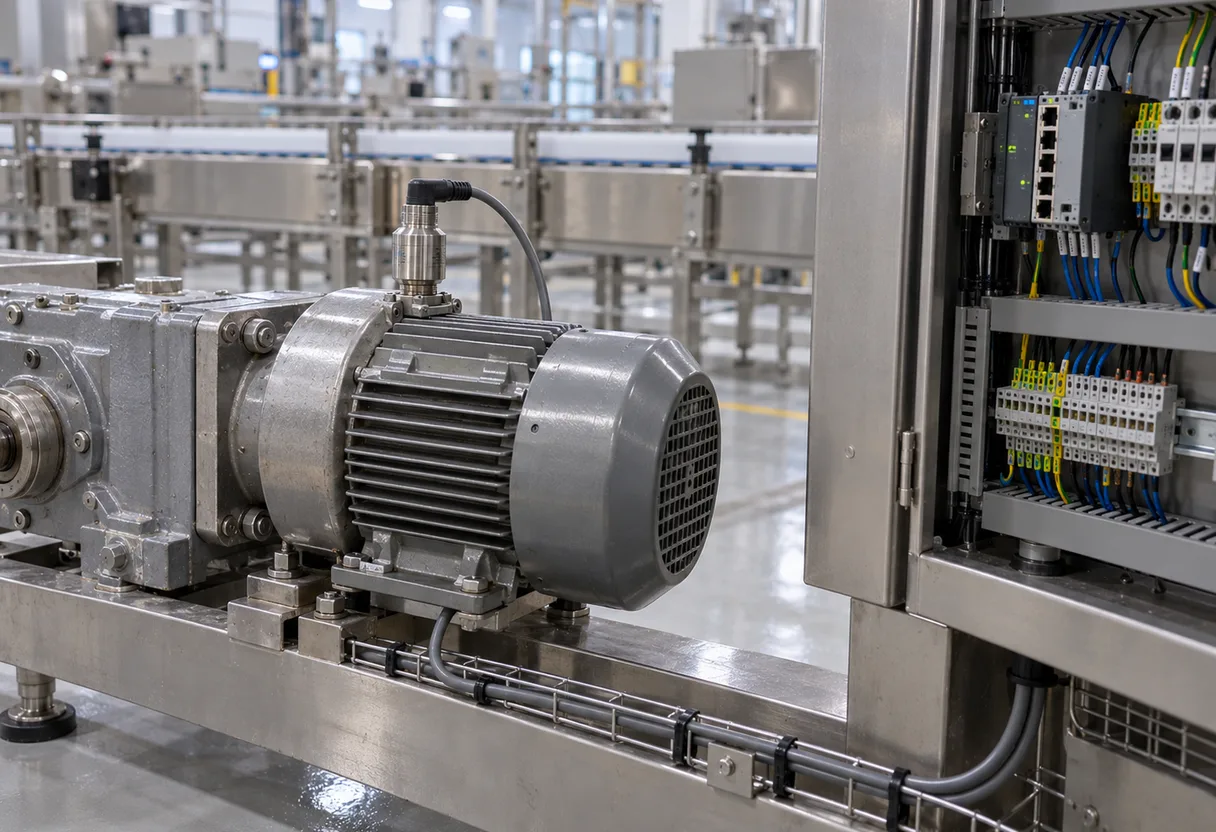
The iGromi Bridge discovers the devices on the network, finds how to talk to them even without a manual, and the AI proposes what each register measures. A person confirms before the data comes in.
How it works, live
From a plugged-in cable to named data, in four steps.
- 01Protocol sweep
The Bridge walks the network and serial ports and lists the devices that reply.
- 02Parameter search
No manual: it tries speed, parity and address until it talks, and finds the registers without the map.
- 03The AI proposes the map
@igromi proposes which physical variable each register is, and its unit.
- 04A person confirms
You confirm or correct it in the app. Only then does the data come in, named and read-only.
Everything is read-only: discovery never writes to the PLC or the sensor. Example values.
Comparison
Which one, and when.
Unified Namespace
Best when
What it requires
Separated zones
Best when
What it requires
Multi-site
Best when
What it requires
| Architecture | Best when | What it requires |
|---|---|---|
| Unified Namespace | Three or more systems need the same data | Naming variables once, with a shared convention |
| Separated zones | Operations will not accept writes to control | An Edge with two network interfaces |
| Multi-site | Management compares several plants | One Edge per plant and a group private cloud |
Where the data lives
Your company decides, depending on the plan.
The same rule in all three architectures: the AI reads, proposes and cites its source; a person decides.
iGromi cloud, separated per company
The shift app: chat, photo and voice records, and AI that answers with its source.
A private, isolated cloud for your company
Adds SAP, ERP and spreadsheets. The AI model runs inside that cloud.
Inside your plant, on Edge or on-premise
Adds PLCs, sensors and cameras. The Edge reads the PLC read-only and keeps measuring offline.
How it looks in the app
The architecture ends in a conversation.
The operator asks in the app and @igromi answers with the PLC value, the SAP order or the shift record, and says where it comes from.
- Chat by area and shift, with photo and voice records.
- Answers with the source of each piece of data.
- Start free, without installing anything in the plant.
Free app in early access. Web available; Android and iOS coming soon.
FAQ
Frequently asked questions
What is an industrial IoT architecture?
Which one should I start with?
Can I start without installing anything in the plant?
How is an undocumented sensor integrated?
Which protocols does the Bridge speak?
Can the AI write to the PLC?
Every shift without a record is data you lose. Start free.
- 1Request early access, free
- 2Pick your trade: maintenance, production or safety
- 3Your team starts with the chat and its trade helper
No credit card. Your data stays yours.