Occupational Health and SafetyOct 30, 2026
5-Minute Safety Talks: 20 Toolbox Talk Topics for Plants
20 five-minute safety talks for a food or manufacturing plant, how to deliver them and a spreadsheet to schedule them and record attendance.
Locked file
charlas-5-minutos-en.xlsx (82 KB)
Leave your work email to download this spreadsheet and hear about the next one.
A 5-minute safety talk is a short safety conversation at the start of the shift, about a single, specific risk in that day's work. It works when it is about something people will touch in the next hour, tells a real case and ends with a question. It does not work when someone reads a generic text downloaded from the internet and passes around a sheet to sign. This guide includes 20 ready topics for a food or manufacturing plant, each with its key message and a closing question, plus an Excel spreadsheet to schedule the talks and record attendance. The DS 44 training records and the regulation's other records are gathered in a separate guide.
Are 5-minute safety talks mandatory? #
No Chilean regulation requires "5-minute talks" by that name. What DS 44, the preventive management regulation in force since February 1, 2025, does require is:
- Occupational risk information before starting work and whenever processes, technologies, materials or substances change (art. 15).
- Training of at least 8 hours, at the frequency set by the preventive work program and never more than two years apart (art. 16).
- Training in the use of personal protective equipment of at least one hour, reinforced every year (art. 13).
- Reliable, documented records of all preventive management (art. 72).
Among the joint health and safety committee's functions, article 47 mentions organizing "informational meetings, talks or any other means of outreach". Short talks are one of the most common ways to provide that reinforcement, but they do not replace the risk information or the 8-hour training. If a company shows fifty signed talks and no course, it has a problem.
How do you give a good talk in 5 minutes? #
- One minute: the case. Something that happened in this plant or a similar one. "On Tuesday, on line 2, someone put a hand into the slicer with the machine paused." No names unless needed.
- Two minutes: the message. A single idea, said in the plant's own words. If the topic is lockout, show the padlock and the tag, not a slide.
- One minute: the question. A question that forces people to look at their own workstation. "Which machine on your line has more than one energy source?" The answer is often the next finding.
- One minute: the record. Topic, date, presenter and attendees. If someone said something that needs fixing, log it as an action with an owner.
It is given by whoever knows the task: the line supervisor, the warehouse manager, the maintenance technician. The safety professional prepares and supports, but a talk always given by the same person from the office ends up as background noise.
Which topics? 20 talks ready for the plant #
Each topic includes the key message and a question to close. Adapt them to your plant: replace the example with one of your own and the talk improves on its own.
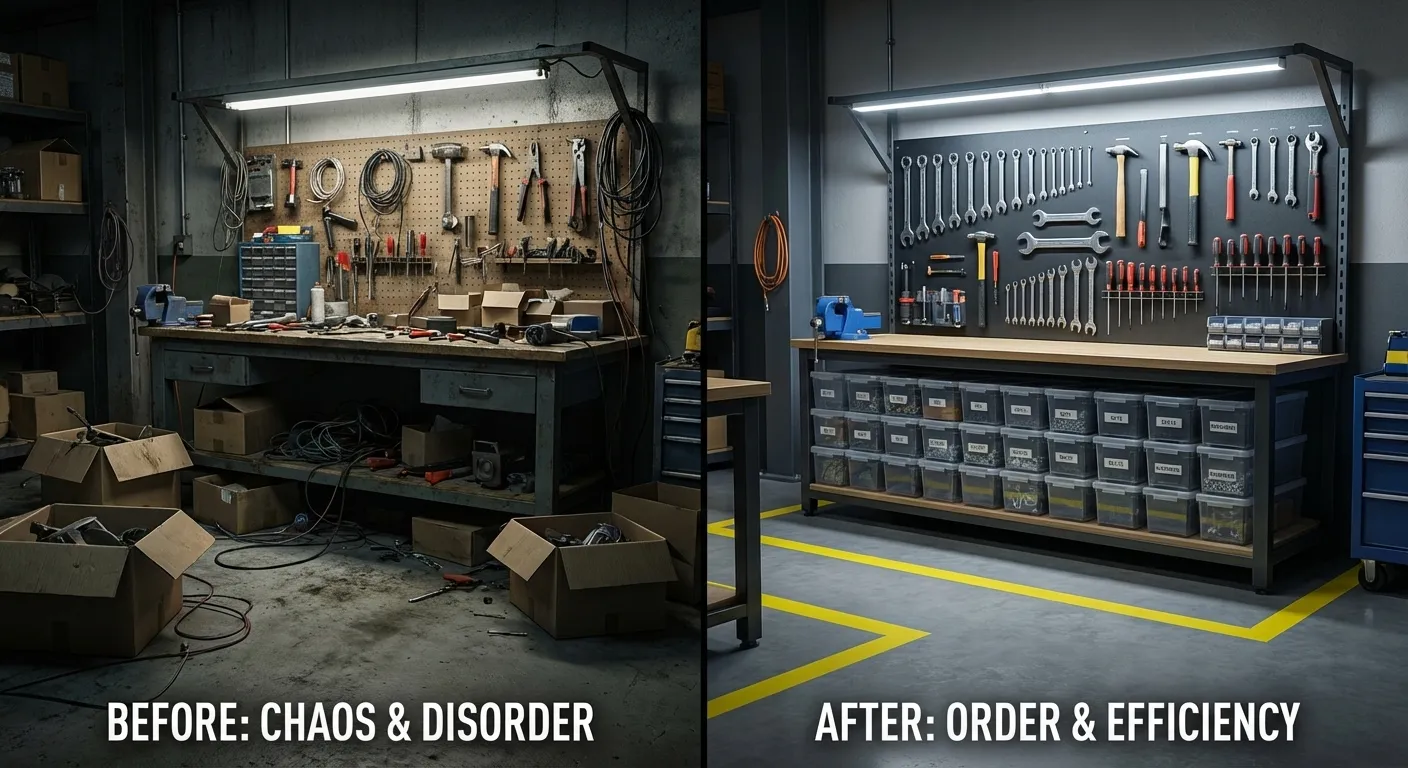
1. Housekeeping on the line
An aisle with boxes, a hose across the floor or an uncleaned spill are the most common cause of falls. Whatever is not in use goes back to its place when the task is done. Closing question: What is in your area today that shouldn't be there?
2. Wet floors and falls
In a food plant the floor gets wet all day. Slip-resistant boots, a wet-floor sign and walking, not running. Reporting a spill is part of the job. Closing question: Where did someone slip this month?
3. Lockout/tagout
Before cleaning or reaching into a machine, cut the power, lock it out with your own padlock and test that it does not start. A stop button is not a lockout. Closing question: Which machine on your line has more than one energy source?
4. Machine guarding
A guard removed to work faster is the cause of most caught-in accidents. If a guard gets in the way, report it; do not take it off. Closing question: Is there a loose or bypassed guard today?
5. Using knives correctly
A sharp knife, a cut-resistant glove on the holding hand, cutting away from the body and never trying to catch a falling knife. Closing question: Where are knives stored when not in use?
6. Manual handling
Bend the knees, keep the load close to the body and do not twist the back. If it is too heavy or awkward, ask for help or a mechanical aid. Closing question: Which load on your shift weighs more than it should?
7. Forklifts and pedestrians
The forklift cannot see someone walking behind a pallet. Pedestrians stay in the marked zone and make eye contact with the operator before crossing. Closing question: Where do pedestrians and forklifts cross in the plant?
8. Working in cold rooms
Full thermal clothing, breaks in a temperate area and never going in without someone knowing. The door must open from the inside and the alarm must work. Closing question: When did we last test the cold room alarm?
9. Noise and hearing protection
Hearing loss does not hurt and does not come back. If you have to shout to talk to someone a meter away, you need hearing protection, properly fitted and worn the whole shift. Closing question: In which areas do you have to raise your voice to talk?
10. Cleaning chemicals
Every product has its safety data sheet. They are not mixed, not decanted into unlabeled bottles, and are used with the gloves and goggles the sheet specifies. Closing question: Do you know where the data sheet for the product you use is?
11. Electrical hazards
Closed panels, cables without exposed splices and no water near outlets. Only an authorized person opens a panel. Closing question: Is there a damaged cable or open panel in your area?
12. Fire extinguishers and small fires
Know where the nearest extinguisher is and what type it is. Aim it at the base of the fire; if the fire grows, evacuate. Closing question: Where is the extinguisher closest to your workstation?
13. Evacuation and safe zones
Evacuation routes are kept clear and exit doors are not locked. When the alarm sounds, follow the evacuation leader without going back for belongings. Closing question: What is your safe zone?
14. Personal protective equipment
PPE is the last barrier, not the first. Check it before use, wear it for the entire exposure and ask for a replacement if it is damaged. Closing question: Which of your PPE is worn out?
15. Incident reporting
A near miss is a free warning. Reporting it is not accusing anyone: it lets you fix things before someone gets hurt. Closing question: What near miss did you see this week?
16. The right to stop work
In the face of a serious and imminent risk, anyone can stop the task and move away, notifying their supervisor. There can be no punishment for doing so. Closing question: What would you do if you saw an ammonia leak?
17. Fatigue and night shifts
Fatigue affects reflexes much like alcohol does. Breaks, hydration and speaking up if someone is not fit to operate a machine. Closing question: At what hour of the shift are the most mistakes made?
18. Hand tools
Each tool for its own job, in good condition and stored in its place. A screwdriver is not a pry bar or a chisel. Closing question: Which damaged tool is still in use?
19. Working at height
Above 1.8 m, use a platform with a guardrail or an anchored harness. Ladders in good condition, set firmly, and never climb with your hands full. Closing question: Which maintenance task is being done on a ladder today?
20. Personal hygiene and food safety
Handwashing, a hairnet and a clean uniform protect the product and yourself. A wound is covered and reported before entering the line. Closing question: Where is soap or paper missing today?
How do you choose each week's topic? #
Twenty topics are enough for five months with one talk a week, but the order should not be alphabetical. The best sources for choosing are:
- The risk matrix. Risks rated significant or intolerable in the IPER matrix go first. The guide to DS 44 and the IPER matrix explains how to assess them.
- Recent incidents. A near miss from this week is the best possible topic: everyone saw it or heard about it.
- Inspections. Findings from the DS 594 checklist or from the joint health and safety committee walkthrough: a blocked extinguisher, a removed guard, an obstructed exit.
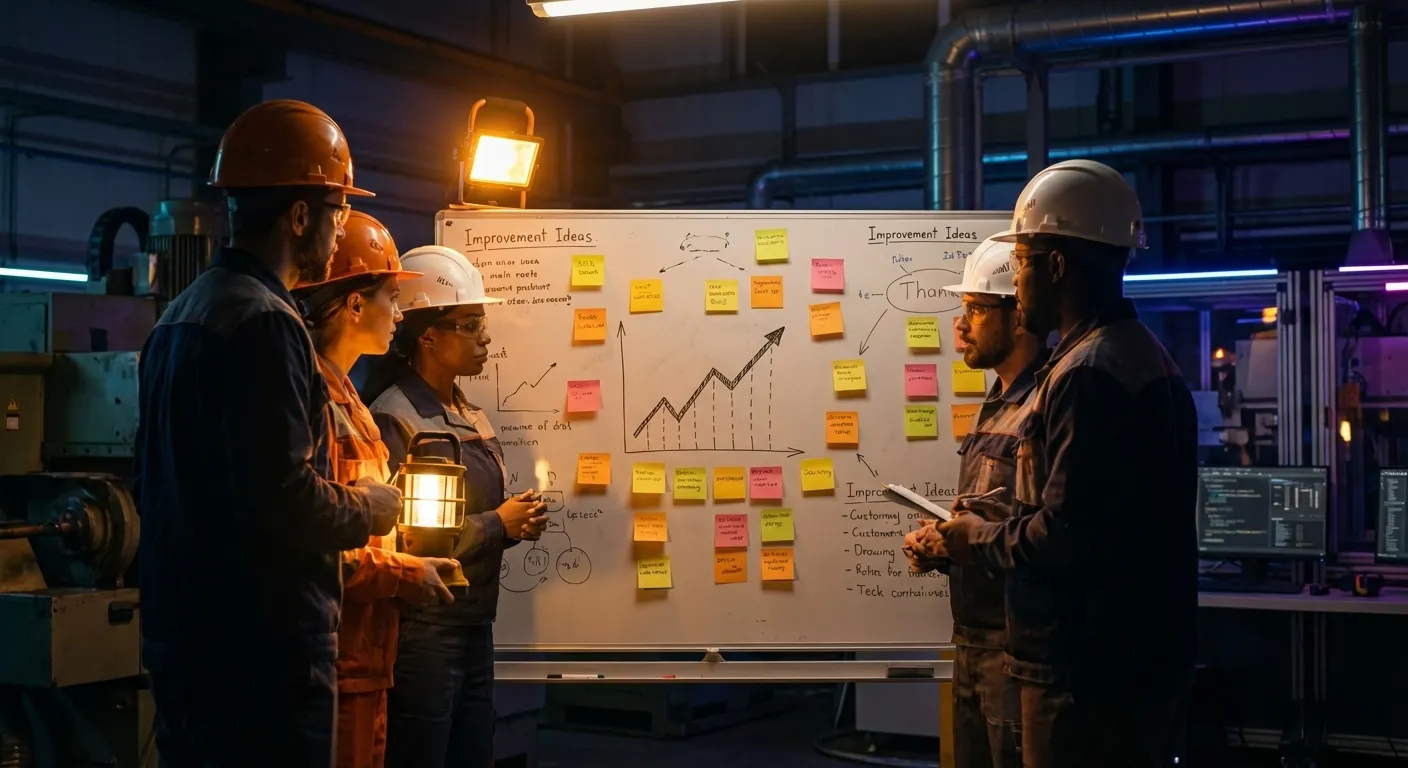
- Changes. A new machine, a different chemical, the start of high season with new staff.
- The season. Heat in summer, rain and wet floors in winter, fatigue on long seasonal shifts.
What should be recorded for each talk? #
DS 44 requires preventive management to be backed by reliable documentation, preferably in electronic format (art. 72). For a talk, the useful minimum is:
- date, shift and area;
- topic and presenter;
- duration;
- name of each attendee with their signature or record;
- observations or actions that came out of the conversation.
The two typical failures are the talk "given" without an attendance list and the attendance list that does not say what was discussed. The spreadsheet in this guide flags both.
Which mistakes make people tune out? #
- Reading. A text read aloud sounds like paperwork. Three sentences of your own are better than someone else's page.
- Covering everything. A talk on "safety in general" leaves nothing behind. One topic, one idea.
- Repeating the same topic without changing anything. If the topic comes back because the problem persists, the talk is not the solution: a measure is missing from the program.
- Giving it where nobody can hear. Next to a compressor, nobody hears. Five meters away, they do.
- Not following up on the question. If someone said a guard is loose and the next week it is still loose, the next talk loses credibility.
What does the 5-minute talk spreadsheet include? #
- The 20 topics with their key message and closing question, editable and with room to add your own topics.
- A talk schedule with ID, date, shift, area, topic, presenter, duration and whether it was given.
- An attendance record that pulls in the talk's topic and date from the ID, to print and sign or fill in on screen.
- A calculated status for each talk: given, scheduled, overdue or no attendance recorded.
- A summary with program completion, attendees and minutes of talks.
It can be downloaded for free on this page and in downloads, along with the plant's other spreadsheets, such as the preventive maintenance plan.
Frequently asked questions #
What is a 5-minute safety talk?
A short safety conversation at the start of the shift, about one specific risk in that day's work. You tell a case, deliver one message and close with a question, and you record who attended.
Are 5-minute safety talks mandatory in Chile?
Not by that name. Chile's DS 44 requires informing workers of the risks before they start work (art. 15), training of at least 8 hours repeated at most every two years (art. 16) and recording preventive management (art. 72). The talks reinforce those obligations; they do not replace them.
Does a 5-minute talk replace the IRL?
No. The occupational risk information (IRL) in article 15 of DS 44 is delivered before starting work and its minimum content is defined: workplace, risks and measures, safe work procedures and substances. A short talk does not cover all of that.
Who should give the talk?
Ideally whoever knows the task: the supervisor, the area manager or an experienced technician. The safety professional prepares the content and supports, and the joint health and safety committee can promote the talks as part of its outreach role.
What is recorded for a safety talk?
Date, shift, area, topic, presenter, duration, name and signature of attendees, and the actions that came out of the conversation. Without a topic or without attendees, the record does not prove anything.
Do it in the app #
The spreadsheet works for scheduling and recording. If you would rather have attendance recorded on the spot, with no sheets to transcribe later, with iGromi you can log each talk from your phone with photo, author and time. Request early access.
Topics
- 5 minute safety talks
- toolbox talks
- toolbox talk topics
- safety talk topics manufacturing
- daily safety talks
- safety meeting topics
- safety talk attendance sheet

About the author
Víctor RuzCEO
Automation and Robotics Engineer (Universidad Andrés Bello, 2012). More than twelve years in robotics and industrial automation. Founder and CEO of iGromi, where he connects machines, systems and plant people with secure industrial AI.