OT HardwareApr 28, 2026
How to Build an Arduino Data Logger (and Why Not in a Plant)
Step by step: a DIY Arduino data logger for sensors, and the risks of bringing hobby hardware into a 24 V industrial panel.

The Appeal of the DIY Data Logger #
Many engineers and maintenance technicians face the same problem: they need to pull data from a machine (temperature, vibration, humidity), but management won't approve the budget for a full SCADA system. The idea that often comes up is: "Let's build our own data logger with an Arduino or an ESP32."
Building a data logger with Arduino is an excellent learning project. Here we walk through the basics of how it works, and we'll also look at why taking that prototype onto a real plant floor could cost you your job.
How to Build a Basic Data Logger #
To put together a temperature and humidity logger, the basic components are:
- An Arduino UNO or Mega board.
- A temperature sensor (e.g., a DHT22 or a MAX6675 thermocouple module).
- A MicroSD card module (to store the CSV file).
- An RTC (Real Time Clock) module such as the DS3231 to record the date and time of each reading.
The code basically reads the sensor's analog or digital pin, opens the file on the SD card, writes the value along with a timestamp and closes the file. It's simple and effective for a university lab.
🚨 Industrial Reality: Noise and Voltage
Arduino boards run on 5 V logic. Inside an industrial electrical panel (with variable frequency drives and three-phase motors) there is massive electromagnetic interference (EMI). An Arduino without galvanic isolation will reset constantly, the data on the SD card will get corrupted and, in the worst case, a 24 V spike will burn the board and start a fire in the panel.
From Arduino to Industrial Grade: iGromi Bridge #
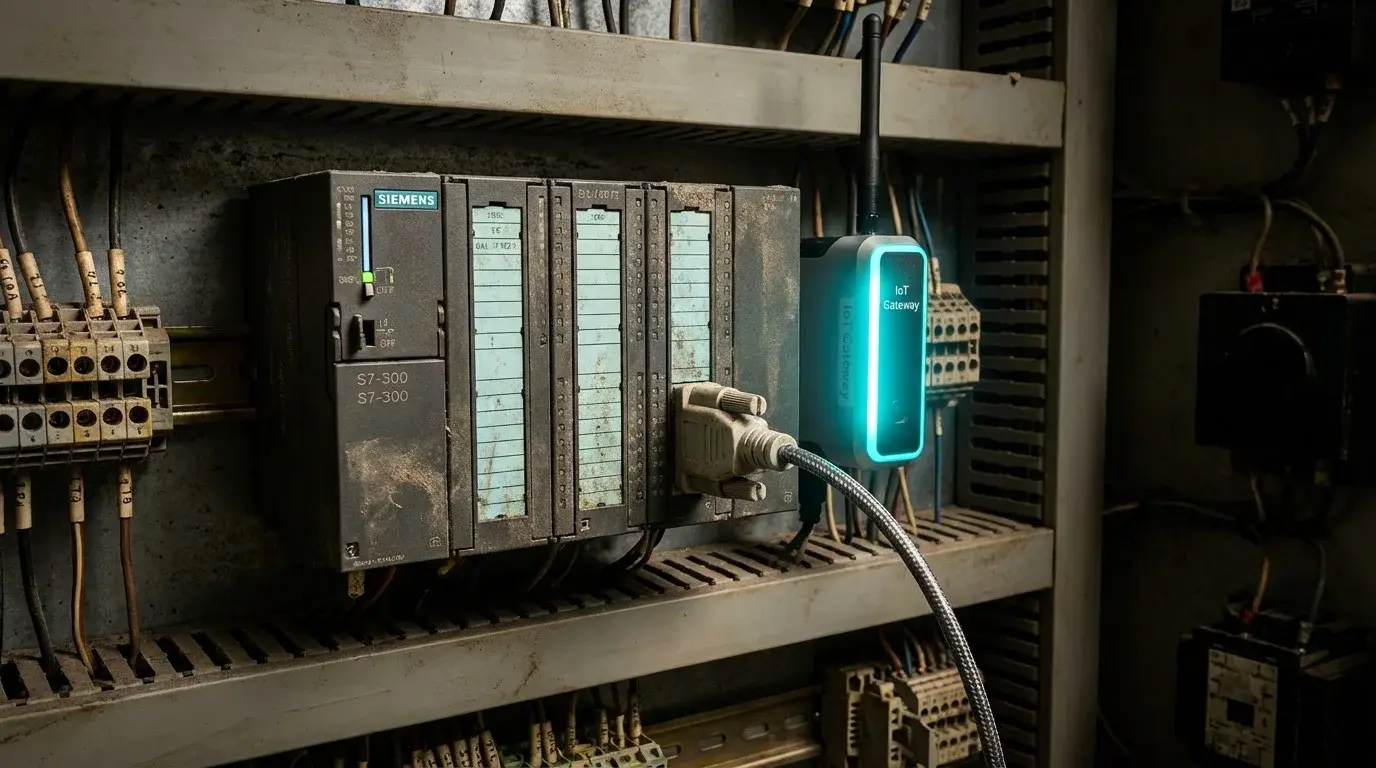
Rapid prototyping doesn't have to be dangerous. If you need a gateway or data logger that captures machine data affordably, the answer isn't wiring one together with loose jumpers; it's using industrial-grade hardware.
Devices such as the iGromi Bridge use powerful microcontrollers (similar to the ESP32) wrapped in an architecture built for heavy industry:
- Optocoupled isolation: Protects the logic circuits from dreaded voltage spikes.
- DIN enclosure and wide temperature range: Secure DIN-rail mounting, rated for -40 °C to +85 °C.
- Native protocols: Instead of saving to an SD card you have to pull out by hand, it transmits directly over Modbus RTU or MQTT to a secure database (Edge Computing).
Don't put your factory's operating continuity at risk. Use tools designed for industry.
Topics
- arduino data logger
- how to make a data logger
- diy data logger
- arduino sd card logger
- industrial data logger
- arduino in industrial environment

About the author
Víctor RuzCEO
Automation and Robotics Engineer (Universidad Andrés Bello, 2012). More than twelve years in robotics and industrial automation. Founder and CEO of iGromi, where he connects machines, systems and plant people with secure industrial AI.