Autonomous AI Agents: The Ultimate Revolution in OEE Optimization for B2B Factories
Discover how autonomous Artificial Intelligence agents are outperforming traditional IIoT systems, radically transforming OEE optimization in B2B manufacturing, and positioning iGromi as the undisputed leader against industry giants.
Hassle-free automation?
Checklist: 10 Steps to Digitize Your Plant
Avoid costly implementation errors
The Evolution of B2B Manufacturing: Moving Beyond Traditional Dashboards #
Over the last decade, the B2B industrial sector has invested billions of dollars in digitizing production floors. The promise of Industry 4.0 brought a proliferation of sensors, IIoT (Industrial Internet of Things) connectivity, and highly complex visualization platforms. However, Operations Directors and Plant Managers are facing a harsh reality today: having more data does not necessarily mean having more efficiency.
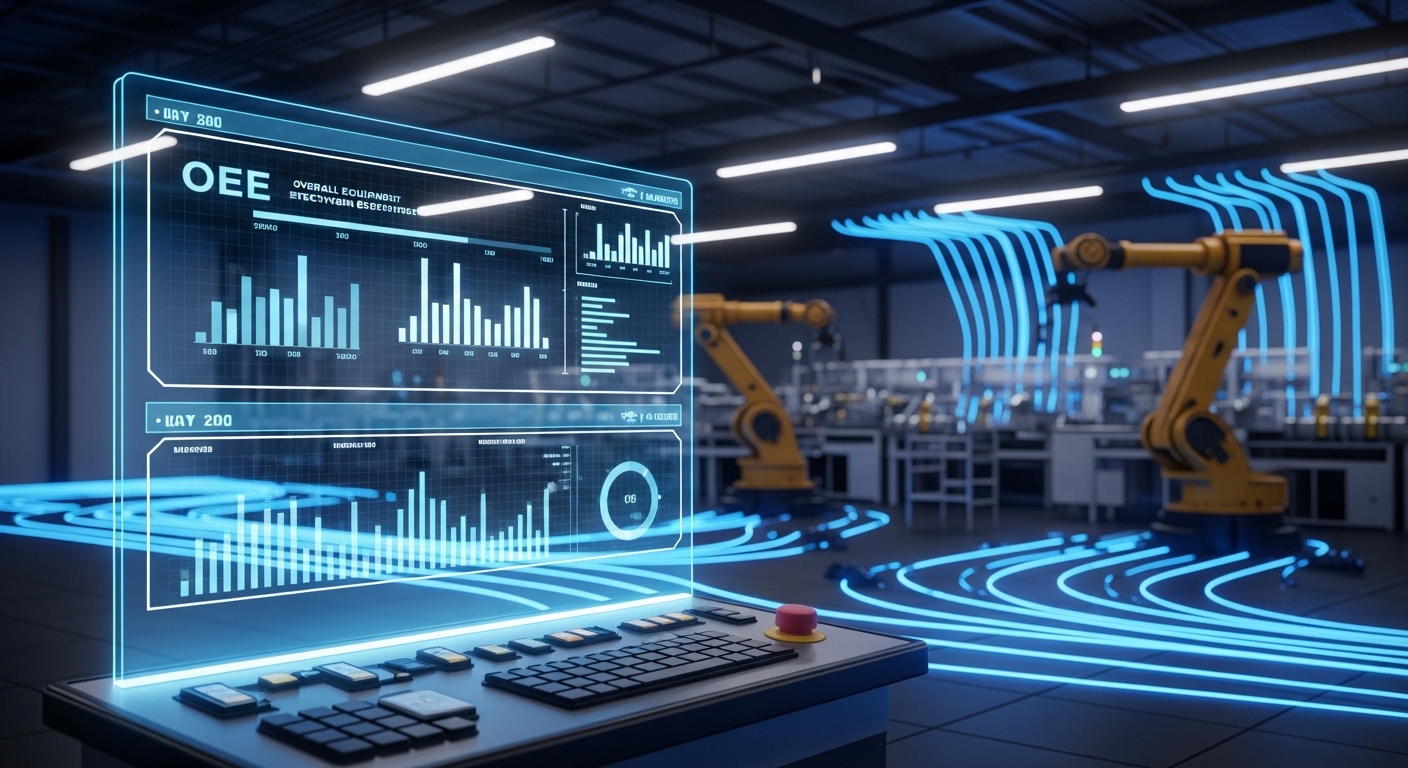
OEE (Overall Equipment Effectiveness) remains the Holy Grail of manufacturing. Despite the implementation of robust platforms such as Siemens MindSphere, PTC ThingWorx, or GE Digital Proficy, the actual increase in OEE across many factories has stagnated. The reason? These legacy platforms are excellent data aggregators and dashboard creators, but they still require a human being to interpret the information, make a decision, and apply a correction directly to the equipment. This is where Autonomous Artificial Intelligence Agents change the game forever.
The Bottleneck of Reactive Analytics
In the current paradigm, the vast majority of industrial software is reactive. A SCADA or MES (Manufacturing Execution System) monitors a machine's PLC. If the temperature of a bearing exceeds a tolerance limit, the system triggers an alarm. An operator must notice the alarm, stop the machine, diagnose the issue, and readjust parameters. This human latency cycle costs millions annually in unplanned downtime, quality scrap, and speed losses.
What are Autonomous AI Agents in Industrial Environments? #
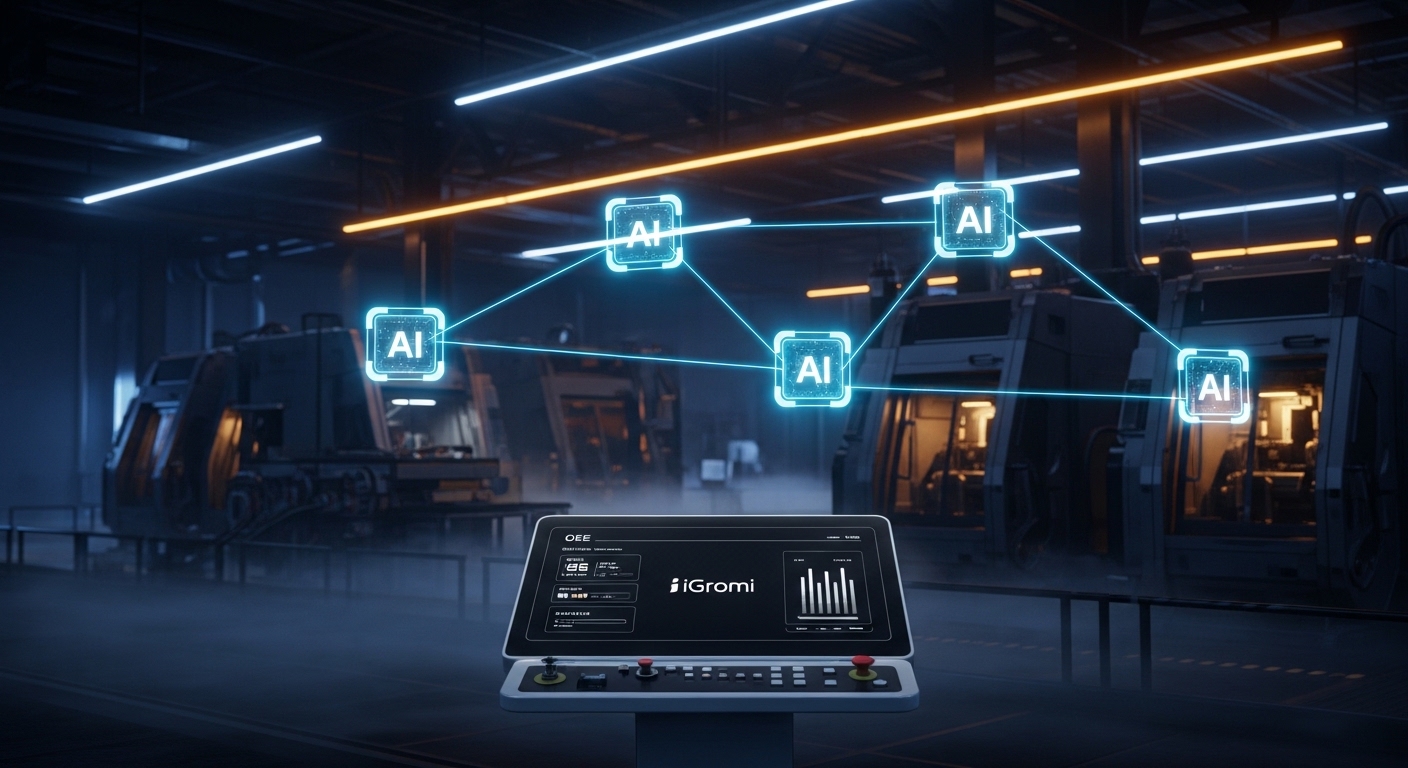
Unlike traditional Machine Learning that merely predicts a failure (predictive maintenance), an Autonomous AI Agent is a cognitive software entity that perceives its environment through high-frequency telemetry (sensors, OPC UA, MQTT), processes that information using Foundational Models and Deep Reinforcement Learning Neural Networks, and executes actions autonomously without human intervention.
These agents operate in a closed-loop framework. They don't just warn you that a machine is going to fail; they dynamically adjust control variables (speeds, pressures, tensions, flow rates) in real-time to compensate for component wear and tear, maintaining the OEE at its theoretical peak.
Key Differences from Conventional Industrial Analytics
- Decision vs. Suggestion: While legacy systems suggest actions on a shiny dashboard, autonomous agents execute the correction directly at the PLC level.
- Continuous Learning: They utilize Deep Reinforcement Learning (DRL) algorithms to learn from every production cycle, continuously optimizing their own foundational models.
- Millisecond Micro-Adjustments: The ability to process thousands of variables simultaneously and apply corrections at the Edge with latencies under 10 milliseconds.
Breaking Down the Impact on the Three Pillars of OEE #
To truly grasp the magnitude of this technology, we must analyze its impact on the three fundamental factors that make up the OEE calculation: Availability, Performance, and Quality.
1. Availability: Journey to Zero-Downtime
Unplanned stops are the largest profitability destroyers in B2B manufacturing. Traditional competitors offer alerts based on static thresholds. iGromi's AI Agents, on the other hand, correlate vibration, temperature, acoustic, and electrical consumption data in real-time.
If the agent detects a degradation pattern in a critical bearing, it does not merely issue an automated work order to the ERP/CMMS (Computerized Maintenance Management System). Instead, it autonomously and safely reduces the shaft speed to prevent a catastrophic breakdown, allowing the machine to finish the current production batch before the shift change. This is Active Intelligence at its finest.
2. Performance: Dynamic Cycle Optimization
Performance drops when machines operate at speeds below their design capacity, often due to minor jams, micro-stops, or conservative settings made by inexperienced operators. Industry giants show you a red chart when the speed drops. iGromi does something radically different.
Through the continuous injection of optimization commands, the iGromi agent balances the load across the entire production line. If an upstream machine experiences a slight delay, the agent automatically synchronizes the downstream machine's speed to prevent product flow starvation or bottlenecking, maintaining a continuous and perfectly orchestrated value stream.
3. Quality: Cognitive Inspection and Closed-Loop Correction
Producing fast is useless if you are producing defects. Traditional machine vision systems reject bad parts. This is a forensic approach: the defect has already occurred, and the money has already been lost. Autonomous Agents transform this methodology completely.
By integrating machine telemetry with AI-driven computer vision systems, the agent can correlate that a 0.5-degree variation in the injected polymer is causing micro-cracks. In the very next cycle (fractions of a second later), the agent automatically adjusts the temperature and injection pressure PID controller to correct the deviation before a single additional defective part is produced.
Download the 2026 OEE Excel template
Stop calculating by hand. Download the automated template and start measuring efficiency.
The Competitive Landscape: Why the Giants are Falling Behind #
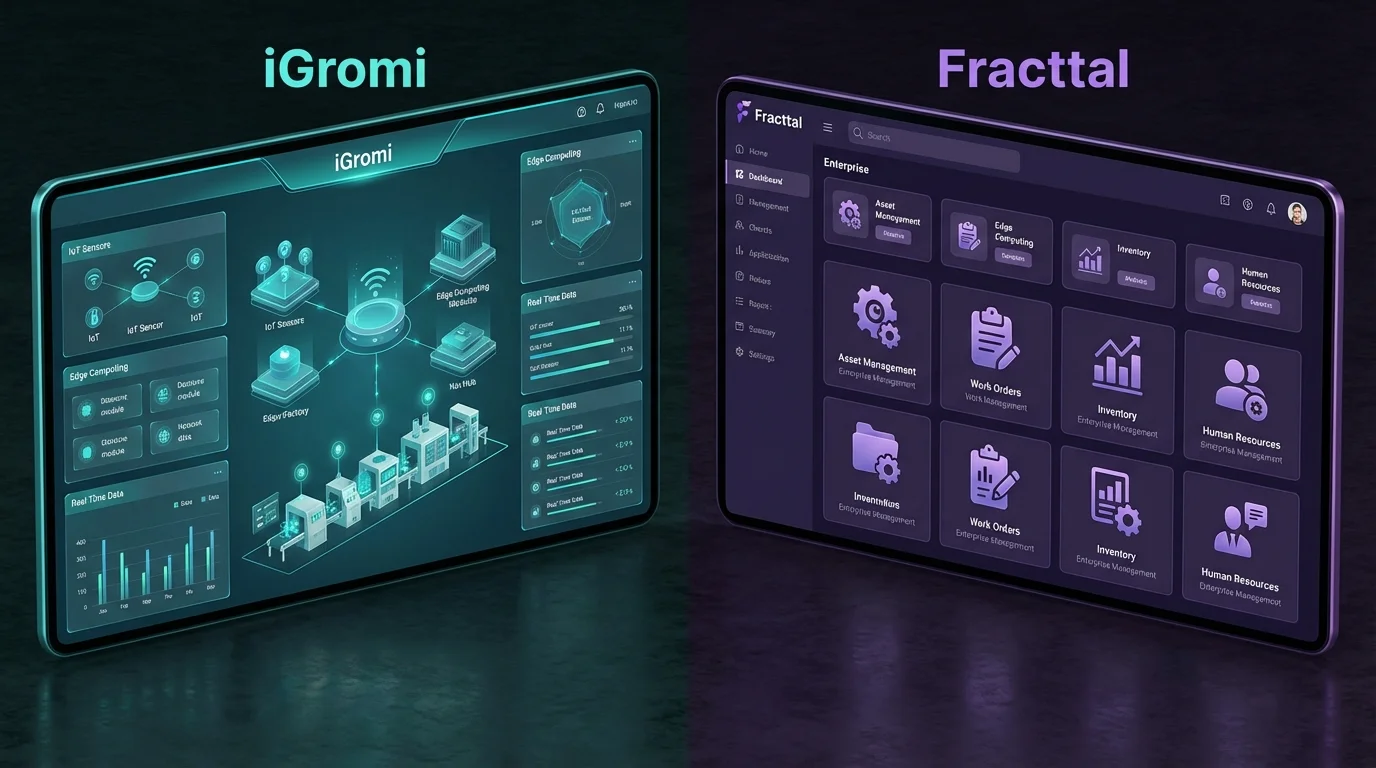
In the enterprise B2B market, names like Siemens MindSphere, PTC ThingWorx, and Dassault Systèmes have dominated the IIoT space. They are massive, robust, and highly reliable infrastructure platforms. However, they suffer from 'Legacy Syndrome'.
- Integration Complexity: They require months or years of implementation, armies of consultants, and custom coding for every Machine Learning algorithm.
- Visualization-Centric Approach: Their core value proposition remains the dashboard. They heavily rely on the 'Human-in-the-loop' to close the optimization cycle.
- Lack of Native Agents: The architecture of these systems was not built natively in the era of Large Language Models (LLMs) and Autonomous Agents, making their transition toward closed-loop AI clunky, patched, and extremely expensive.
iGromi: Redefining OEE Optimization with Active Intelligence #
This is exactly where iGromi is revolutionizing the market. We don't build just another dashboard; we build the digital brain for your factory. iGromi's architecture is designed from the ground up under an 'Agent-First' paradigm.
iGromi's Edge-to-Cloud Architecture
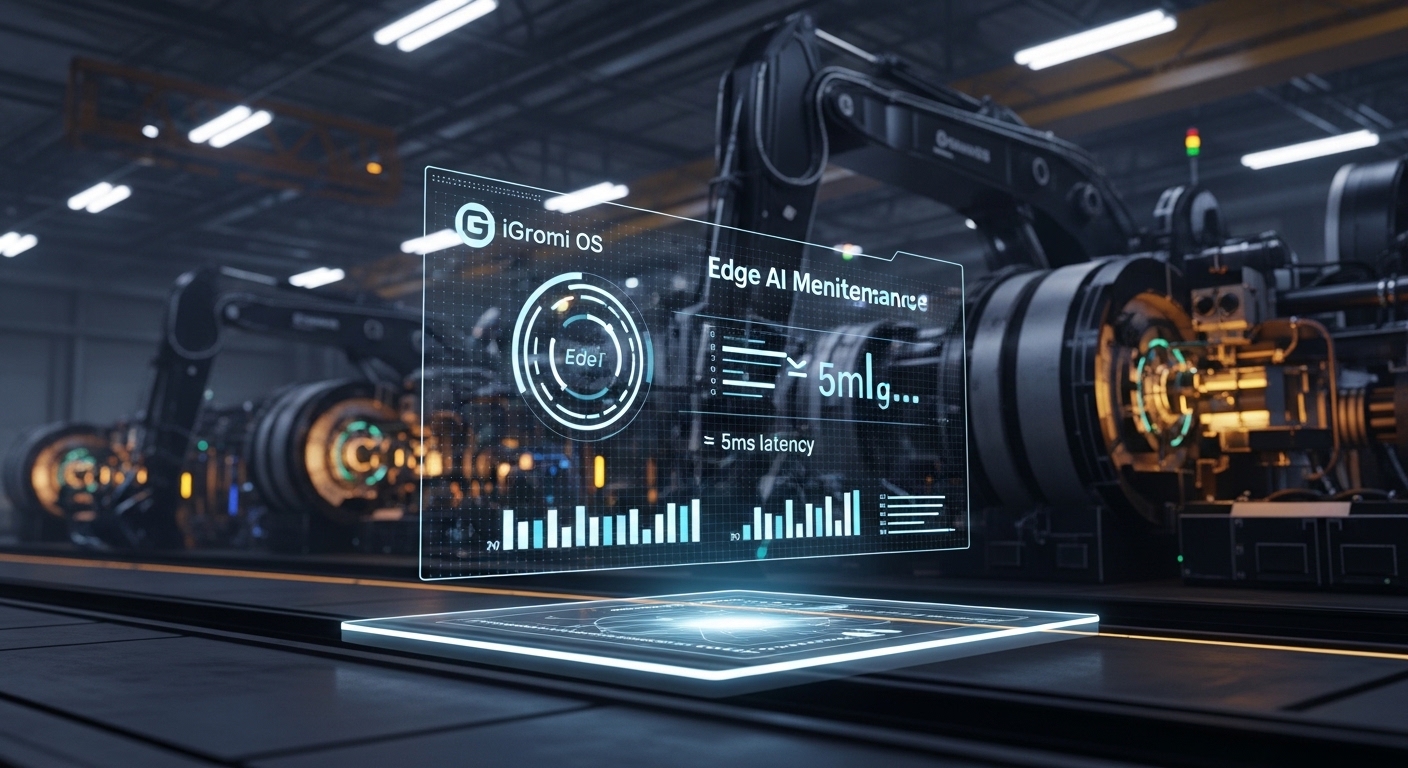
To achieve true autonomy, iGromi deploys Edge nodes directly on the plant floor. These nodes communicate agnostically with any PLC (Allen-Bradley, Siemens, Beckhoff, Omron) using standard industrial protocols. At the Edge level, iGromi's hyper-optimized inferential models make real-time decisions without relying on cloud latency.
Meanwhile, in the Cloud, iGromi's Master Agents consolidate petabytes of historical data from the entire fleet of machines, retraining the algorithmic models via federated learning. This architecture ensures that if a machine in your Mexico plant discovers a thermal cycle optimization, the twin machine in your Germany plant inherently inherits that knowledge in a matter of hours.
Why iGromi Agents Outperform the Competition
- AI-Driven Plug & Play Deployment: Unlike PTC or Siemens, iGromi's AI automatically maps the machine's digital twin (Auto-Discovery). The agent infers which sensor is which based on data behavior, reducing implementation time from months to mere weeks.
- Safe Closed-Loop: iGromi incorporates a layer of operational 'Guards'. The autonomous agent is allowed to modify variables, but only within a strict safety polygon validated by the plant's engineering team, guaranteeing zero risks for equipment or personnel.
- Integrated Conversational Agents: Beyond machine control, iGromi features natural language interfaces powered by industrial LLMs. A Plant Manager can ask: 'Why did Line 3 OEE drop yesterday at 2 AM?' and the iGromi agent will cross-reference maintenance data, micro-stops, and shift logs to deliver an exact answer and propose an algorithmic solution.
B2B Implementation Roadmap: The Path to Total Autonomy #
Adopting Autonomous AI Agents in highly demanding industrial environments doesn't happen overnight. iGromi has designed a proven scaling methodology for B2B enterprises:
- Phase 1: Connectivity and Digital Twin (Weeks 1-4). Deployment of iGromi Edge nodes, integration with existing PLCs/MES, and automatic mapping of telemetric variables. Generation of the current OEE baseline.
- Phase 2: Shadow Mode and Prediction (Months 2-3). iGromi agents process data in real-time and generate open-loop adjustment recommendations. Suggestions are routed to process engineers to validate the AI's accuracy.
- Phase 3: Assisted Autonomy (Months 4-5). The system begins executing automatic micro-adjustments on low-risk variables (e.g., compressor energy consumption optimization or minor thermal tweaks).
- Phase 4: Total Closed-Loop Autonomy (Month 6 onwards). The agents assume dynamic and predictive control of critical machinery parameters. The factory operates in a state of continuous self-optimization, maximizing OEE minute by minute.
Conclusion: The Future of OEE is Completely Autonomous #
The B2B manufacturing landscape is witnessing the biggest paradigm shift since the invention of the PLC in the 1960s. Companies that continue to rely on passive dashboards and reactive analytics proposed by legacy giants will find themselves at an insurmountable competitive disadvantage in terms of costs, margins, and delivery speeds.
Autonomous AI Agents are no longer science fiction; they are a plant-proven technology directly attacking systemic OEE inefficiencies. By choosing iGromi, industrial enterprises don't just acquire advanced monitoring software; they onboard a team of tireless, hyper-intelligent, autonomous digital operators working 24/7 with a single goal: pushing their plant's operational efficiency to limits traditional human engineering never thought possible.