MaintenanceFeb 25, 2026
The Ultimate Guide to TPM (Total Productive Maintenance) for 2026
Tired of maintenance just putting out fires? Discover how to implement the 8 pillars of TPM step by step and achieve Zero Breakdowns in your industrial plant.

🔥 The "Firefighting" Culture Is Dead #
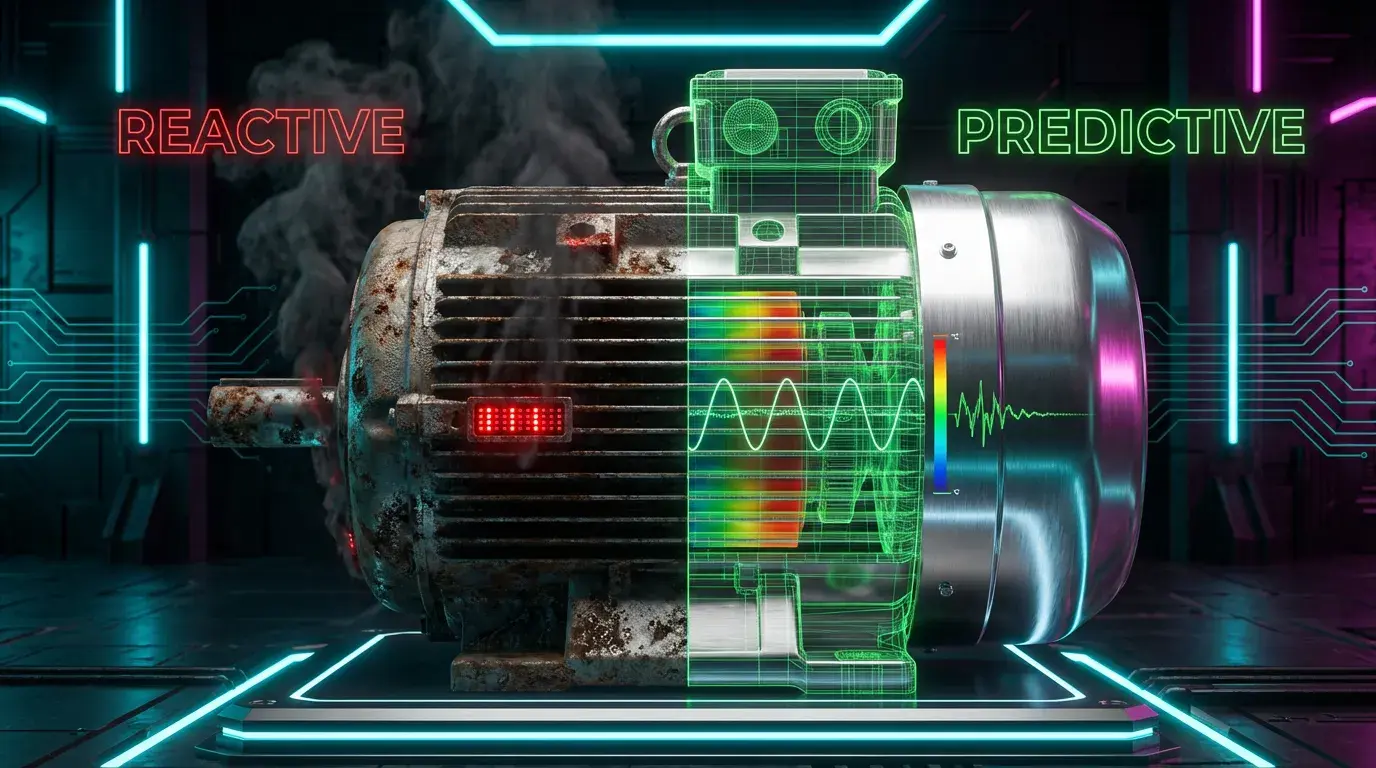
If your maintenance team spends 80% of its shift running around with the toolbox because a critical machine stopped unexpectedly, you don't have a maintenance department, you have a fire station.
TPM (Total Productive Maintenance) is the Japanese philosophy that turns "I operate, you repair" into "we take care of our plant together".
What exactly is TPM (Total Productive Maintenance)? #
Total Productive Maintenance (TPM) is a holistic equipment maintenance program that originated in Japan with the Japan Institute of Plant Maintenance (JIPM). Unlike traditional maintenance (where mechanics look after the machine and operators look after the product), TPM blurs that line.
TPM's main goal comes down to three absolute zeros:
- Zero Breakdowns: Machines do not break down unexpectedly.
- Zero Defects: Machines do not produce scrap because they are poorly adjusted.
- Zero Accidents: A clean, standardized operating environment eliminates occupational hazards.
Preventive Maintenance vs. TPM
This is the most common mistake. Many plant managers believe that changing the oil every "X" hours (preventive) is enough.
- • Sole responsibility of technicians
- • Based on the manufacturer's calendar
- • The operator only reports when something fails
- • Creates "islands" of knowledge
- • Shared responsibility (operator + technician)
- • Based on actual condition (OEE)
- • The operator cleans, lubricates and tightens daily
- • A culture of machine ownership
Locked file
oee-calculation-template.xlsx
Leave your work email to download this spreadsheet and hear about the next one.
The 8 Pillars of TPM Explained #
To reach excellence, TPM rests on a solid foundation (5S and shop-floor organization) and stands on 8 steel pillars. If you try to implement this without control software, or with pen and paper, the bureaucracy will crush the project in less than three months.
1. Autonomous Maintenance (Jishu Hozen)
It is the crown jewel of TPM. It means giving basic responsibility for the machine's health back to the person who operates it 8 hours a day. The operator handles Level 1 tasks: deep cleaning, visual inspection for leaks, minor lubrication and tightening loose fasteners.
Benefit: It frees senior mechanics to do re-engineering and complex diagnostics, instead of topping up oil reservoirs while the operator looks at their phone.
2. Focused Improvement (Kobetsu Kaizen)
Proactively identifying the minor stops (the famous 2-minute "micro-stops") that kill productivity by the end of the month. Cross-functional teams (an engineer, a mechanic and two operators) attack that specific problem until they eradicate it at the root.
3. Planned Maintenance (Preventive/Predictive)
The classic pillar, modernized. Scheduling major maintenance when production is not affected, based on metric history. This is where IoT sensors and predictive acoustic AI integrate with TPM. To build this pillar's calendar, use the preventive maintenance plan Excel template.
4. Quality Maintenance (Hinshitsu Hozen)
The machine must not just "run", it must run "right". This pillar seeks machine settings that ensure every part coming off the line is within tolerance, eliminating the waste of rework.
5. Maintenance Prevention (Early Equipment Management)
It starts before you buy the machine. Use the full history of failures and operator complaints about Machine A to make sure that when you buy Machine B, the manufacturer has modified the design so it is ridiculously easy to clean and lubricate.
6. Training and Education
Closing skill gaps. Operators learn basic mechanics; mechanics learn electronics (PLC); electrical engineers learn continuous predictive diagnostics.
What Kills TPM: "Paper and Excel"
The #1 reason TPM fails in Latin America is administrative fatigue. Asking an operator to fill in a paper "Autonomous Maintenance" checklist at 3:00 AM practically ensures it will be filled in falsely at the end of the shift in the cafeteria.
You need the operator to check a tablet at the machine and tick boxes with one finger, instantly alerting the maintenance web dashboard without using a drop of ink.
Digitize Your Autonomous Maintenance with iGromi7. Administrative and Office TPM
Purchasing bureaucracy (failing to approve the order for a cheap spare part) can stop a line worth far more. This pillar requires the warehouse, human resources and accounting to work with agility so they do not hold up production.
8. Safety, Health and Environment (SHE)
The absolute foundation. An operator who is afraid to put a hand near a gear because the safety guard is broken will never feel "ownership" of the equipment. Safe environment = safe production.
The Hidden Heart: OEE #
You cannot implement TPM without measuring OEE (Overall Equipment Effectiveness) at the same time. OEE is the thermometer of your plant's health; TPM is the medicine.
If you are still calculating it by hand or assuming numbers, I strongly recommend reading our master guide to OEE.
A Pragmatic Step-by-Step for 2026 #
If you try to launch all 8 pillars at once on the 50 machines in your plant, you will fail by day 20. Use this route:
- The Pilot Equipment: Pick just ONE machine. The worst one you have (the "bottleneck").
- Extreme Cleaning: Ask the plant manager to put on coveralls and scrape it clean alongside the operator. Initial cleaning is "inspection with your hands". You will find missing bolts and leaks that go back years.
- Set the Base Standards: Agree on 5 daily cleaning points (3 minutes total) and 2 lubrication points. Print photos of WHAT has to be touched.
- Training: Teach the operator to tell greases apart and how to spot pressure drops on a gauge.
- Visual / Technology Audit: Retire the paper checklists and set up an HMI system (industrial tablet) where the record is digital and auditable.
TPM is not a destination, it is an industrial way of working. The first month of implementation will hurt, but month 12 is when you will dominate the market with overwhelming quality. Start small, think corporate.
Topics
- industrial tpm maintenance
- tpm pillars
- how to implement tpm
- tpm vs preventive
- total productive maintenance
- tpm oee

About the author
Víctor RuzCEO
Automation and Robotics Engineer (Universidad Andrés Bello, 2012). More than twelve years in robotics and industrial automation. Founder and CEO of iGromi, where he connects machines, systems and plant people with secure industrial AI.