What Is Physical AI and What It Still Needs to Reach the Plant Floor
Physical AI perceives, reasons and acts on the real world. What sets it apart from generative AI, why plants have data but no context, and what infrastructure a model needs to understand a factory without putting it at risk.

Hassle-free automation?
Checklist: 10 Steps to Digitize Your Plant
Avoid costly implementation errors
What Physical AI is #
Physical AI is artificial intelligence that perceives the real world through cameras and sensors, reasons about what it perceives and acts on it: robots, autonomous vehicles, manipulation arms, inspection systems and, increasingly, the machines of a plant. The term became popular when accelerated-hardware vendors started describing the next wave after generative AI: models that do not only write, but see, understand space and time, and make decisions with material consequences.
The difference from a chatbot is not model size but risk. If a text assistant is wrong, you fix the paragraph. If a system deciding about a press is wrong, there is an accident. That changes everything around the model.
The three components #
- Perception. Cameras, sensors and control signals turned into data a model can read: object detection with models such as YOLOv8, vibration, current, temperature, PLC states.
- Reasoning. Vision and language models that interpret the scene and propose an action: "the box in position 4 has a crooked label", "the line 2 motor shows an imbalance pattern".
- Actuation. The step where the proposal becomes something that happens in the world. In robotics the system executes it; in an industrial plant, actuation goes through the existing control system and through a person.
The gap: plenty of telemetry, zero context #
Industry has spent decades installing instrumentation: PLCs, SCADA, historians, MES, ERP. Telemetry capture was a success. What was never captured was operational context. The ERP knows the production orders; the PLC knows speed or pressure; cameras record passively; the operator keeps the experience of the shift, and it leaves with them. None of them understands the full state of the plant.
A general model reasons very well, but it does not know which machine is stopped, which camera points at the packaging line, what the last maintenance ticket was or which safety protocol applies. Without that map, Physical AI on a plant floor is a pilot with excellent reflexes and no instruments.
Digitize your Plant with iGromi
Book a 30-min demo and discover how to increase your productivity.
What is missing: operational memory #
The thesis we work with at iGromi is that just as personal computing needed an operating system and the cloud needed orchestration, AI applied to the physical world needs a common infrastructure that translates the plant into structured, safe memory. We call it the Industrial Second Brain: a knowledge graph and a persistent memory that relate every signal to its machine, its line, its history and its rules.
Accelerated hardware provides the brain: the capacity to run models at the edge. Operational memory provides the nervous system: the relational map that lets those models act meaningfully. One without the other never reaches production.
How to deploy it without putting the plant at risk #
- Local-first. Models run at the plant, on desktop GPUs or industrial platforms, with no cloud dependency. Low latency and data stays home.
- Non-intrusive perception. Existing cameras become sensors; a passive gateway reads PLCs without modifying their program.
- Memory before autonomy. First build the map of the plant; then connect models and agents to that map.
- Human in the loop. AI never controls the machine directly. It proposes work orders, adjustments or alerts; a person approves; the control system executes.
Examples that already exist #
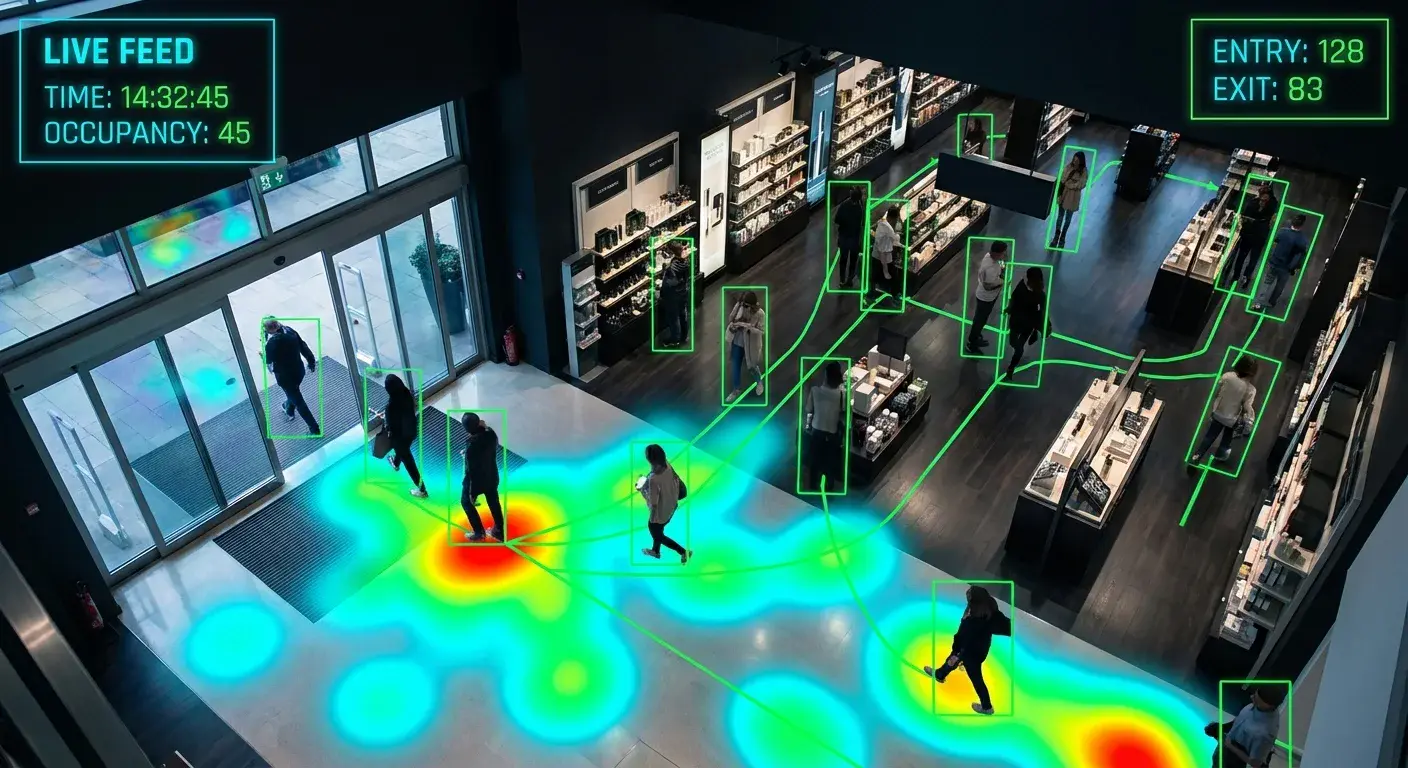
You do not need a humanoid robot to talk about Physical AI. Counting production with the 19 security cameras a poultry producer already had across four farms and feeding the result into SAP, or detecting a motor imbalance weeks before failure, are Physical AI: perception, reasoning and an action someone decides. The next step, when models start coordinating tasks, is called agentic AI.
Frequently asked questions #
What is Physical AI?
Physical AI is artificial intelligence that perceives the physical world, reasons about it and acts in it: robots, vehicles, plant machinery and vision systems. Unlike a chatbot, its mistakes have material consequences, which is why it needs operational memory and a human in the loop.
How is Physical AI different from generative AI?
Generative AI produces text, images or code from data. Physical AI uses those same models, together with vision and sensors, to understand and act on real machines and environments, under time, safety and context constraints a chatbot never faces.
What does a plant need to apply Physical AI?
Three things: perception (connected cameras and sensors), operational memory (which machine it is, how it works, what happened before) and a governance rule: AI proposes and a person approves before the control system executes.
Context: this article is part of the guide to industrial artificial intelligence: what it is, where it works and four production deployments in Chile.