Platform · VETA
VETA: short interval control for load and haul.
How it looks today
The shift learns about the gap once it is over.
A shovel that runs out of trucks at ten shows up in the eight o'clock evening report. By then, the lost tonnes cannot be recovered.
- The twelve-hour report explains the shift; it does not correct it.
- What was decided over the radio is not recorded with its cause.
- Shift report: the gap shows up 9 h 45 min later.
- Every five minutes: alert at 10:20.
How it works
A closed loop that runs every five minutes.
Measure, prioritize, act and verify. The next interval measures the effect of the previous action.
- 01 · MeasureThe interval gap against plan and the end-of-shift projection.
- 02 · PrioritizeThe action with the highest estimated effect, with its likely cause and its source.
- 03 · ActOne owner, one deadline. A person approves or corrects the proposal.
- 04 · VerifyThe next interval measures whether the previous action worked.
The platform
This is what VETA looks like.
Four views of the real platform. The numbers are simulated: VETA is not running at a mine site yet.
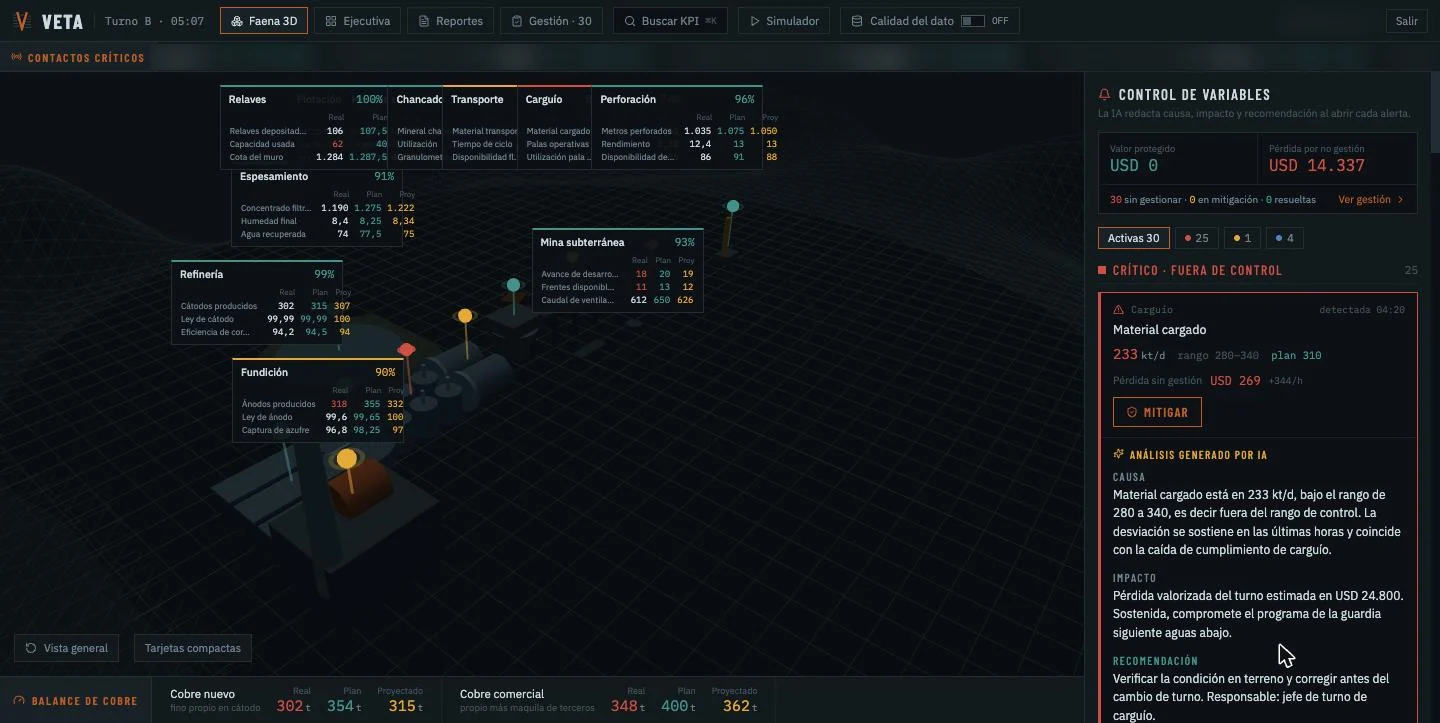
Each process with actual, plan and shift projection; on the right, the alerts with the analysis the AI drafts.
What the shift supervisor sees
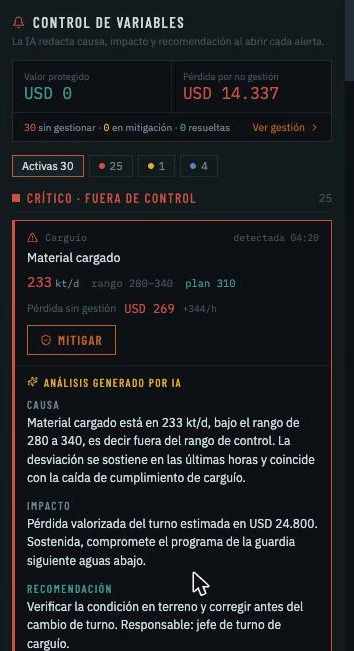
It does not say “out of range.” It says what is happening and what to do.
Each alert brings the likely cause, the end-of-shift effect if nothing changes and an action with an owner. The AI drafts it with its source; the shift supervisor decides.
- One alert per interval, the one with the biggest effect: not a list of a hundred.
- Approving or correcting is recorded with name and time.
- The next interval confirms whether the action worked.
Where it runs
VETA is installed on the engine. The site keeps storing with no link.
The engine is installed once per organization; each site gets a lightweight Edge. VETA reads the site facts from the engine and duplicates no process.
Equipment
- Shovels, haul trucks and LHD units
- Cameras already in place
- PLCs, sensors, OBD2 and GPS
Lightweight Edge
- Reads read-only
- Processes video on site
- Keeps storing if the link drops
up to date
iGromi engine
- Facts and KPIs by process
- The AI proposes, citing the source
- Approvals with name and time
People
- Shift supervisor and dispatch
- Supervisors and management
- Each sees what their role allows
Readings from the Edge to the engine
FAQ
Frequently asked questions
What is short interval control?
Is VETA in production?
Does it replace the dispatch system or mine planning?
What data does it need?
Does the AI give orders to operators?
Where is it installed?
Every shift without a record is data you lose. Start free.
- 1Request early access, free
- 2Pick your trade: maintenance, production or safety
- 3Your team starts with the chat and its trade helper
No credit card. Your data stays yours.