Industries · Mining
Artificial intelligence for the mine site that proposes; a person decides.
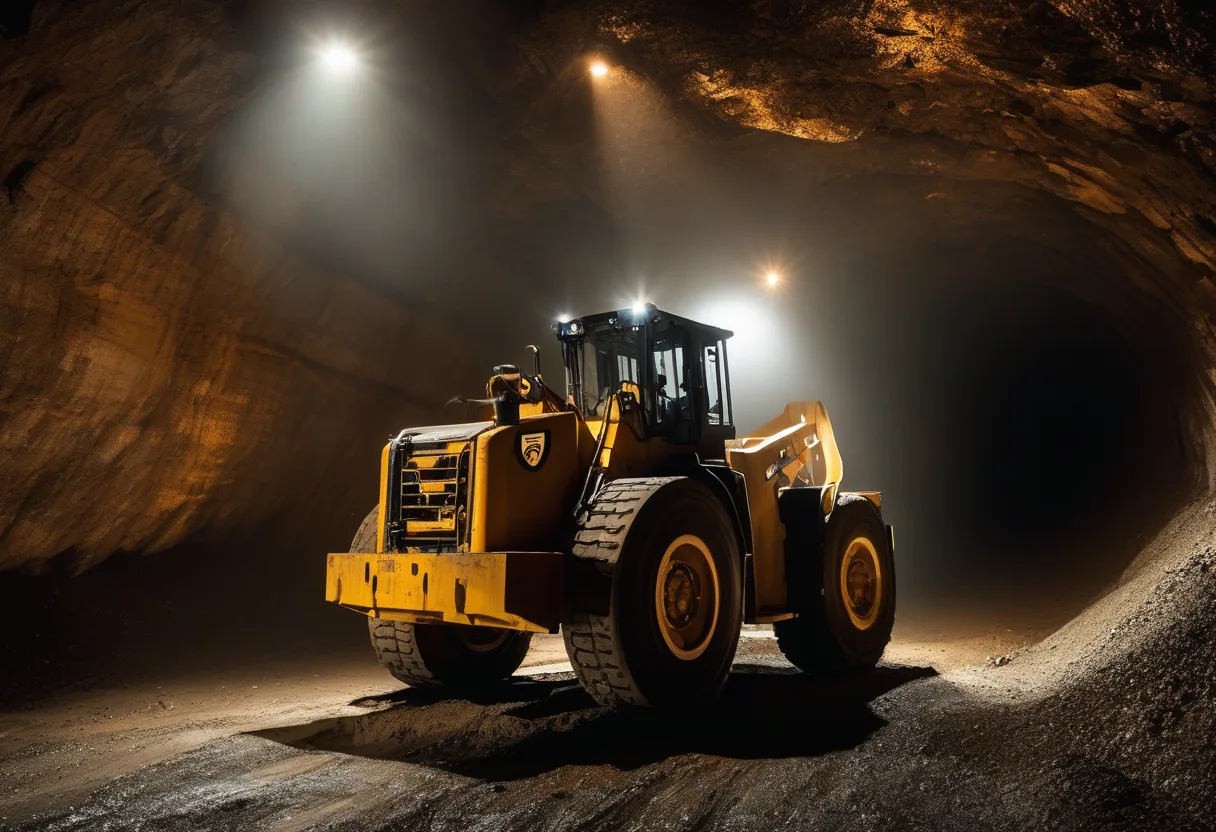
How it looks today
Each piece of equipment with its own system. The shift finds out at the end.
Dispatch sees the shovels, the vendor sees the trucks, the cameras record and the spreadsheet gets filled in at the end. When a shovel runs out of trucks at ten, the report says so at eight in the evening.
- The gap is discovered when it can no longer be recovered.
- What was solved over the radio is recorded nowhere.
01 · Assets · loading equipment
Vision on loading equipment.
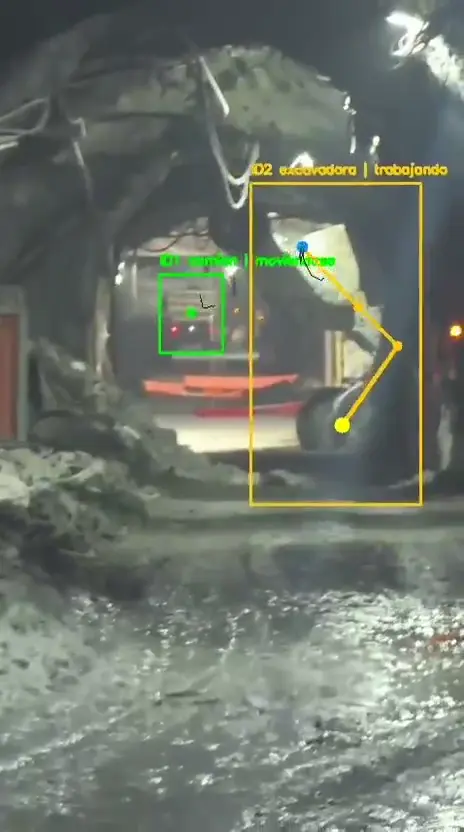
The equipment camera is already there. The vision model runs on site, classifies what is loaded in each bucket (ore, dilution, water-mud) and logs an event with its clip. The analyst confirms or corrects.
- It uses the teleremote or equipment cameras: no new cameras are installed.
- Video does not leave the site; the event goes up.
- Each classification is kept with its evidence clip.
The recording shows the vision engine recognizing equipment and status. Ore classification runs on that same engine, in pilot.
02 · Systems · load and haul
Short interval control with VETA.
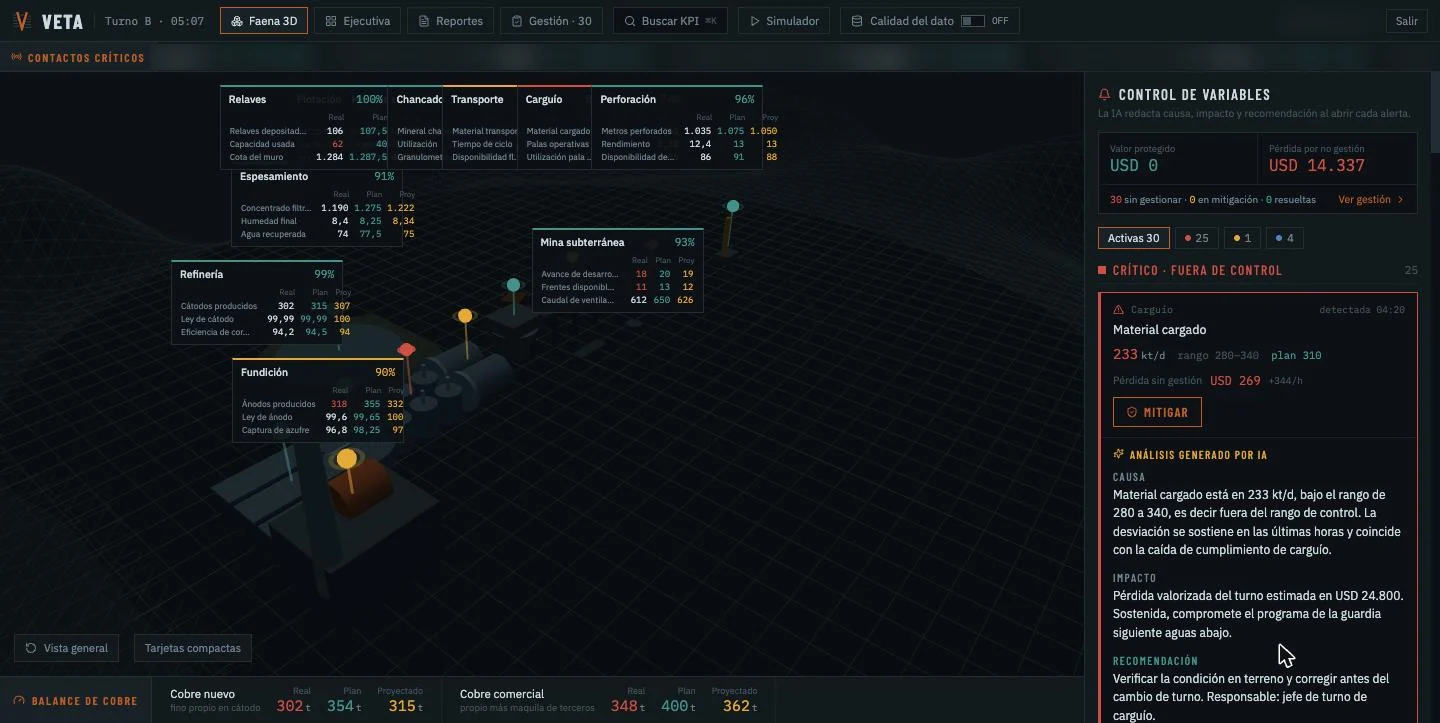
VETA measures the shift gap against plan every five minutes, proposes the highest-impact action with an owner, and measures in the next interval whether it worked.
- Tonnes, cycle and waits against plan, interval by interval.
- The alert brings the likely cause, end-of-shift effect and a proposed action.
- Planning stays with the site: VETA takes it as input.
03 · Assets · fleet
Fleet read via OBD2 and GPS.
Speed, idling, engine hours and position of every truck, with no brand required. What dispatch already records is cross-checked with what the equipment reports.
- Long idling and ramp speed as an alert, not a spreadsheet.
- Engine hours that feed condition-based maintenance.
- Works with equipment from different brands.
CAM-07
34 km/h · ramp
CAM-12
idling 18 min
CAM-15
dumping
Demo with simulated data · read via OBD2 and GPS
04 · People · safety
Safety: who is where and what can be seen before the incident.
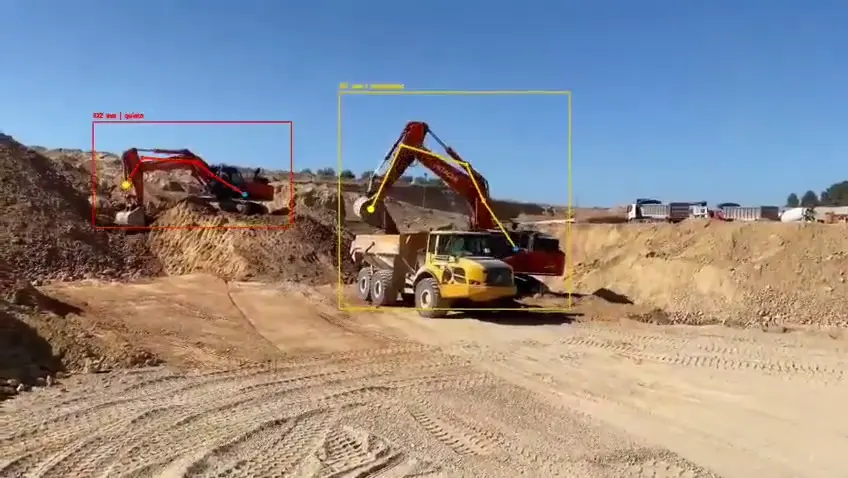
Vigía counts how many people are in each area with a radio tag, without cameras, and tells you who is missing in an evacuation. iGromi_Guard detects PPE, exclusion zones and person-to-equipment proximity, at the edge.
- Vigía: headcount by area and evacuation, without seeing faces.
- iGromi_Guard: the event belongs to the location, not the person; video does not leave the site.
- Every alert reaches a person who decides what to do.
- Loading4
- Crusher6
- Workshop9
- Ramp3
Evacuation: 2 people still to confirm
05 · People · training
Training and inductions with LUMYA.
The approved procedure goes in as a document and comes out as a course. The AI writes only from that document, and the evidence is not a signature on a sheet: it is the person showing they know how to do it.
- Contractor inductions held to the same standard as your own staff.
- When the procedure changes, the course is rebuilt from the new version.
- A record of who learned what, and when.
- 01Approved procedureIn goes the document the company already validated; for example, a conveyor belt lockout.
- 02Course with video and questionsThe AI builds the course only from that document, without inventing steps.
- 03The person demonstratesAttendance is not enough: the worker shows they can carry out the process.
How a mine site connects
One engine per organization. One lightweight Edge per site.
Solutions are installed on the engine, as many as the business uses. If the link drops, the site keeps storing and resends when it returns.
Equipment
- Shovels, haul trucks and LHD units
- Cameras already in place
- PLCs, sensors, OBD2 and GPS
Lightweight Edge
- Reads read-only
- Processes video on site
- Keeps storing if the link drops
up to date
iGromi engine
- Facts and KPIs by process
- The AI proposes, citing the source
- Approvals with name and time
People
- Shift supervisor and dispatch
- Supervisors and management
- Each sees what their role allows
Readings from the Edge to the engine
Where the engine lives
The mining company decides the architecture.
The same engine on the site Edge, on company servers or in the cloud. The AI does not connect to databases or PLCs; it proposes, and a person approves.
- Mine site. The Edge reads cameras, sensors, PLCs and GPS; vision runs here and video does not leave.
- Engine. Lives in: company servers.
- People. In the app: the AI proposes with its source and a person decides.
What leaves the site
Events and signals
Video is processed on site and does not leave.
If the link drops
The Edge stores
It syncs with the engine when the link returns.
Who runs it
Company IT
Under its policies, in its data center.
Best for: Several sites with their own data center.
FAQ
Frequently asked questions
Can I use GPS on mining trucks without switching vendors?
What does iGromi do at a mine site?
What is in production and what is not?
What happens if the link to the site goes down?
Does video leave the site?
Can the AI move equipment or write to the PLC?
Do I need one engine per site?
Every shift without a record is data you lose. Start free.
- 1Request early access, free
- 2Pick your trade: maintenance, production or safety
- 3Your team starts with the chat and its trade helper
No credit card. Your data stays yours.