ArchitectureDec 1, 2025
Edge Computing vs Cloud Computing: Where Should Plant Data Be Processed?
The cloud is not built for real-time control. Learn when to process data with industrial edge computing at the plant and when to send it to the cloud for historical analytics.

The Computing Pendulum #
1960s: everything on the central mainframe. 1980s: distributed computing (PCs). 2010s: "Everything to the cloud." 2020s: "Wait, we need local processing again." Welcome to edge computing.
What Is Edge Computing? #
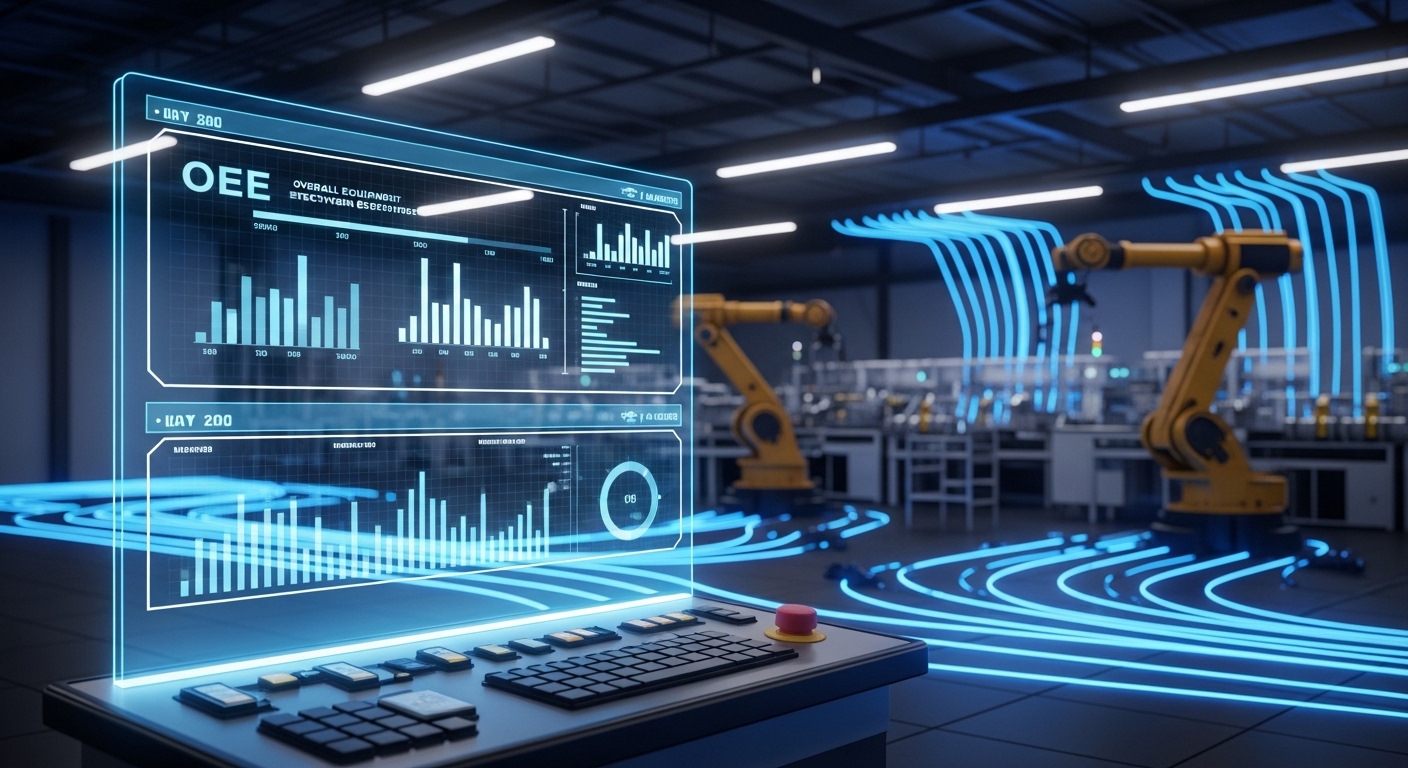
Edge computing means processing data close to where it is generated (at the "edge" of the network) instead of shipping it to a remote data center. In industry, the "edge" is a gateway, an advanced PLC or a mini PC on the plant floor.
Why Can't Everything Go to the Cloud? #
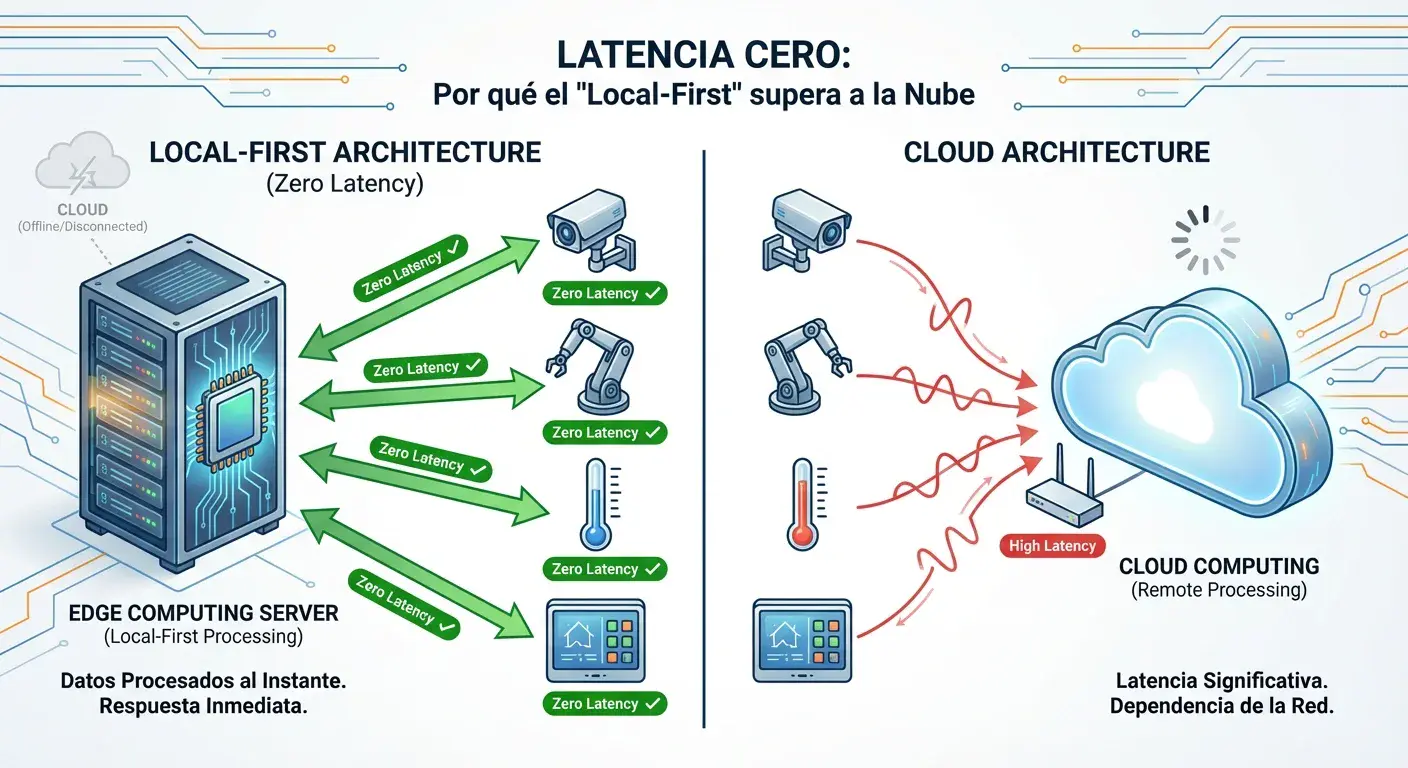
1. Latency
A PID control loop has to respond in milliseconds. Sending data to AWS, processing it and getting the answer back takes 100-500 ms. Far too slow.
Example: temperature control on an oven. If the cloud takes 200 ms to respond, the batch is already burned.
2. Bandwidth
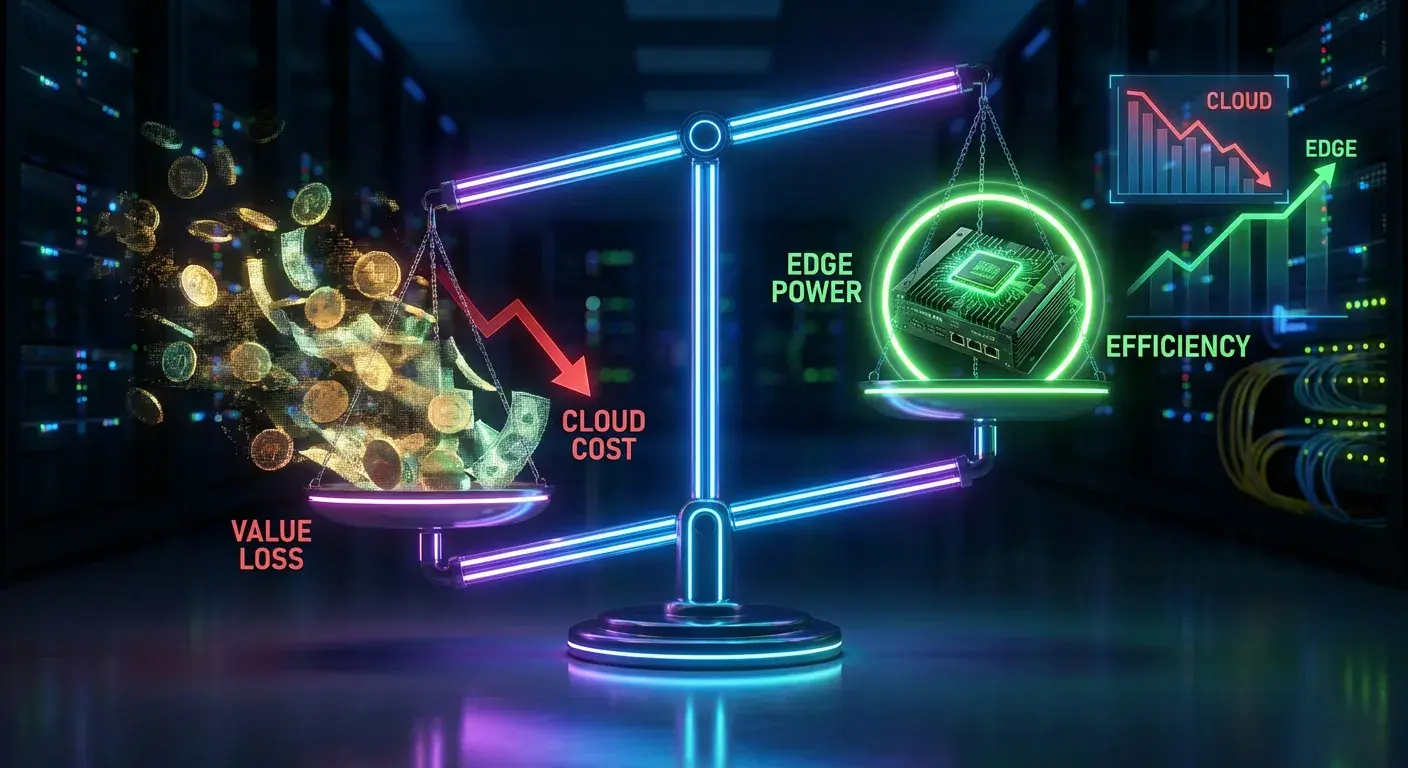
An industrial camera generates 10 MB/s. With 20 cameras that is 200 MB/s = 1.6 Gbps. Streaming that to the cloud 24/7 costs thousands of dollars a month. It is better to process locally (defect detection) and send only the alerts.
3. Reliability
If your internet connection drops, does your plant stop? With edge computing, critical processing keeps running offline. Data syncs when the connection comes back.
What DOES Belong in the Cloud? #
- Historical analytics: trends over months and years.
- Machine learning: training models with data from multiple plants.
- Corporate dashboards: KPIs for management.
- Long-term storage: regulatory retention (7 years of data).
Hybrid Architecture: The Best of Both Worlds #
The modern answer is a three-layer architecture:
- Edge (plant floor): real-time control, anomaly detection, data aggregation.
- On-premise (local data center): short-term storage (30-90 days), plant dashboards.
- Cloud: advanced analytics, ML, historical storage.
Example: Machine Vision on a Packaging Line #
A plant needed to inspect 100 bottles per minute to catch misapplied labels.
Cloud option: send 20 images per second to AWS Rekognition. Cost: a monthly bill that grows with every image. Latency: 150 ms (too slow).
Edge option: an edge device with a GPU running a YOLO model locally. Cost: no per-image charge. Latency: 30 ms. Only images with defects (5% of the total) go to the cloud for model retraining.
Conclusion: Edge + Cloud, Not Edge vs Cloud #
It is not a battle. It is a partnership. The edge handles what is urgent and critical. The cloud handles what is complex and strategic. Together they make a system that is resilient, fast and scalable.
"The edge is the muscle. The cloud is the brain. You need both."
Topics
- industrial edge computing
- edge vs cloud
- edge computing vs cloud computing
- edge computing manufacturing
- hybrid edge cloud architecture
- latency

About the author
Francisco CisternasSenior Full-Stack Lead
Works on both the Edge and the cloud. Builds iGromi's infrastructure, from firmware on the controller to the dashboards the plant uses.