CybersecurityDec 8, 2025
The New Battlefield: Cybersecurity in OT Environments in 2025
Hackers are no longer after credit cards; they want to stop your production. A survival guide for exposed industrial networks.
A New Kind of War #
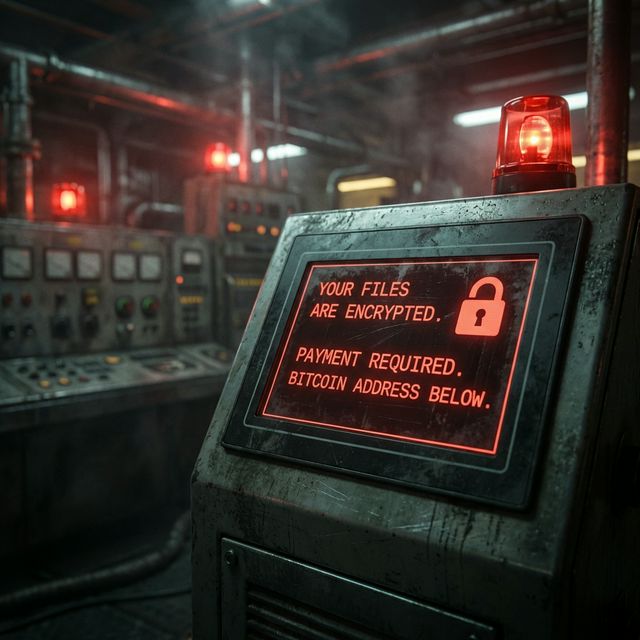
In corporate IT, if a hacker gets in, they steal credit card data. In OT (Operational Technology), if a hacker gets in, they can close safety valves, overheat reactors or take down a city's power grid. The consequences aren't just financial; they're physical.
Industrial ransomware (such as LockerGoga, Ryuk and Conti) has grown sharply in recent years. Attackers know every hour of downtime costs thousands of dollars, which is why industrial plants are the fastest to pay the ransom.
The "Air Gap" Myth #
Many plant managers sleep soundly thinking: "My network isn't connected to the internet; I have an air gap." That's an illusion.
There is always a bridge: an integrator who plugs in an infected laptop to program a PLC, a technician who uses a hidden 4G modem to avoid walking to the control room, or the IT department that connected the historian to push reports to the ERP.
Framework: IEC 62443 and Defense in Depth #
The international ISA/IEC 62443 standard is the bible of industrial cybersecurity. Its core principle is "Defense in Depth": multiple layers of protection, on the assumption that one of them will fail.
1. Network Segmentation (Zones and Conduits)
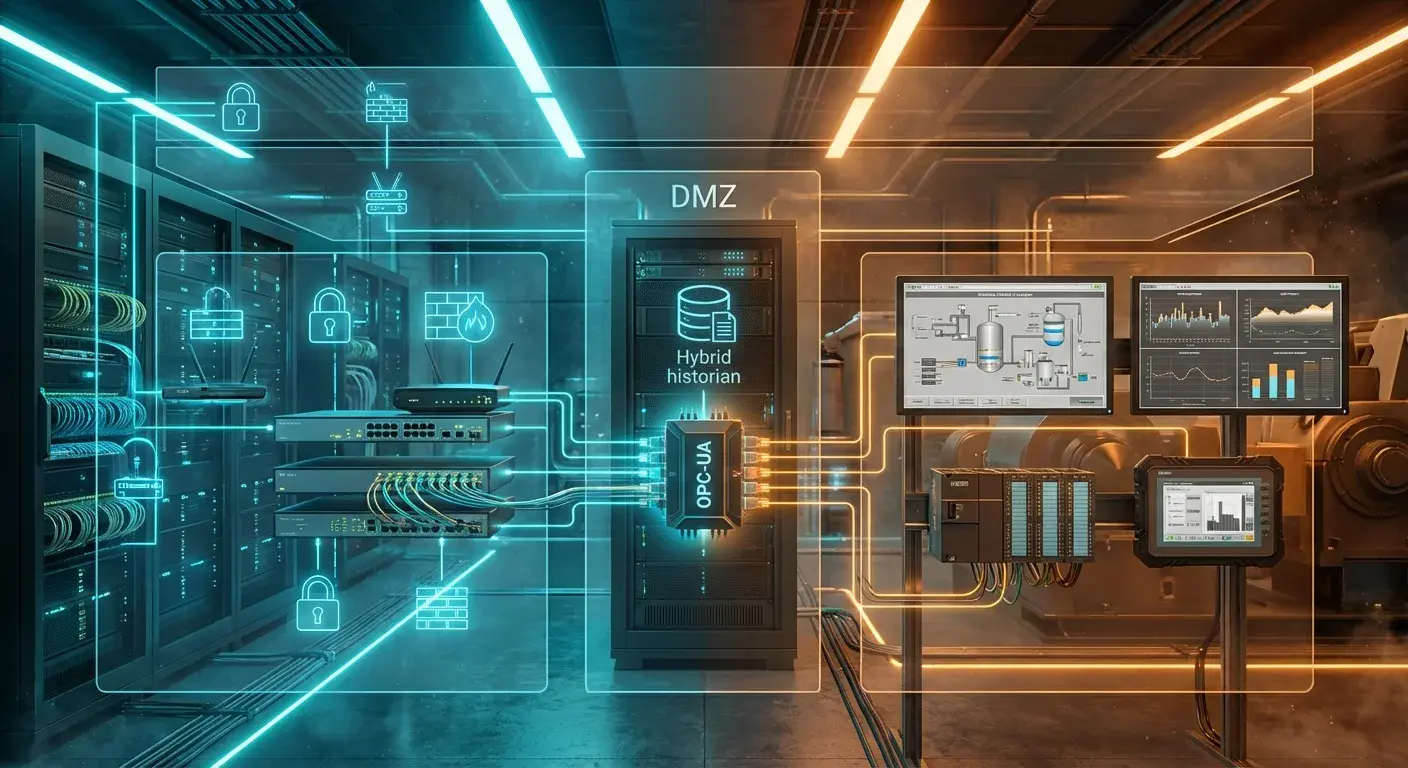
Your plant must not be a flat network where someone in the front office can ping the furnace PLC. Split the network following the Purdue Model:
- Level 4 (IT): ERP, email, internet.
- IDMZ (Industrial Demilitarized Zone): The border. Bridge servers, jump hosts.
- Level 3 (OT Operations): Historians, application servers.
- Level 2 (OT Control): SCADA, HMI, engineering workstations.
- Level 1 (OT Process): PLCs, VFDs, remote I/O.
Traffic between zones must pass through an industrial firewall with deep packet inspection (DPI) that understands industrial protocols (Modbus, EtherNet/IP).
2. Secure Remote Access Management (ZTNA)
Traditional VPNs are dangerous: once you're in, you have access to the whole network. The current trend is Zero Trust Network Access (ZTNA).
With Zero Trust, the remote user doesn't connect to the "network"; they connect to a "specific application" (e.g., only port 502 on PLC A). Everything else is invisible.
3. "Virtual Patching" for Legacy Systems
It's common to find Windows XP or Windows 7 in plants because the SCADA software won't run on Windows 10. You can't patch those operating systems.
The answer is "virtual patching": placing a security device (IPS) right in front of the vulnerable machine. The device knows the vulnerabilities (CVEs) of the old Windows version and blocks any malicious traffic that tries to exploit them, shielding the legacy equipment without touching it.
Immediate Action Steps #
- Automated asset inventory: You can't protect what you can't see. Use passive monitoring tools (such as Nozomi, Dragos or Claroty) to map every device on your network.
- Basic hygiene: Change the default passwords on PLCs and switches. Disable USB ports on control workstations.
- Offline backups: The only real defense against ransomware is tested backups disconnected from the network. If everything gets encrypted, you must be able to restore "from scratch" (bare-metal restore) quickly.
Topics
- industrial cybersecurity
- ot network security
- ot cybersecurity
- industrial ransomware
- defense in depth
- iec 62443

About the author
Francisco CisternasSenior Full-Stack Lead
Works on both the Edge and the cloud. Builds iGromi's infrastructure, from firmware on the controller to the dashboards the plant uses.