TechnologyDec 9, 2025
The Death of the Traditional PLC: The Rise of the Hybrid Edge Controller
Is the PLC headed for extinction? Modern industrial automation software combines ladder logic with Docker, Python and Linux on hybrid edge controllers.
Ladder Logic Has Stalled #
The PLC (Programmable Logic Controller) was born in 1968 to replace relays. Ladder Logic was designed so that the electricians of that era could understand it. Incredibly, more than 50 years later, we still program the same way.
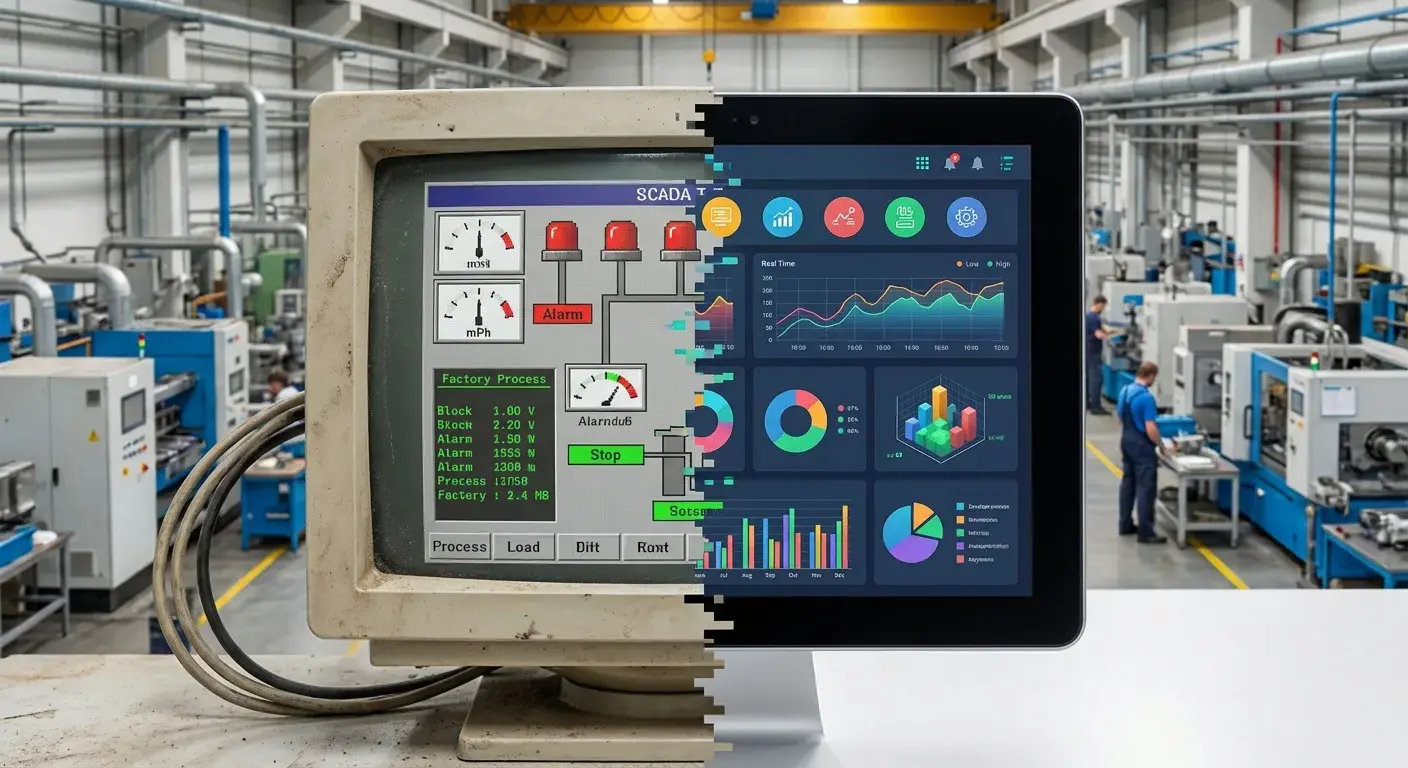
While the software world moved forward by leaps and bounds (Git, CI/CD, containers, AI, object-oriented programming), industrial automation stayed frozen in time. Traditional PLCs are:
- Closed (vendor lock-in): Hardware and software tied to the manufacturer.
- Hard to integrate: Connecting a PLC to a SQL database or a REST API usually takes expensive licenses or extra hardware.
- Not secure by design: Built in a pre-internet era.
Enter the Edge Controller #
A new breed of devices is blurring the line between OT and IT: devices such as the Phoenix Contact PLCnext, the WAGO Edge Controller, the Opto22 groov EPIC and Beckhoff's PC-based solutions.
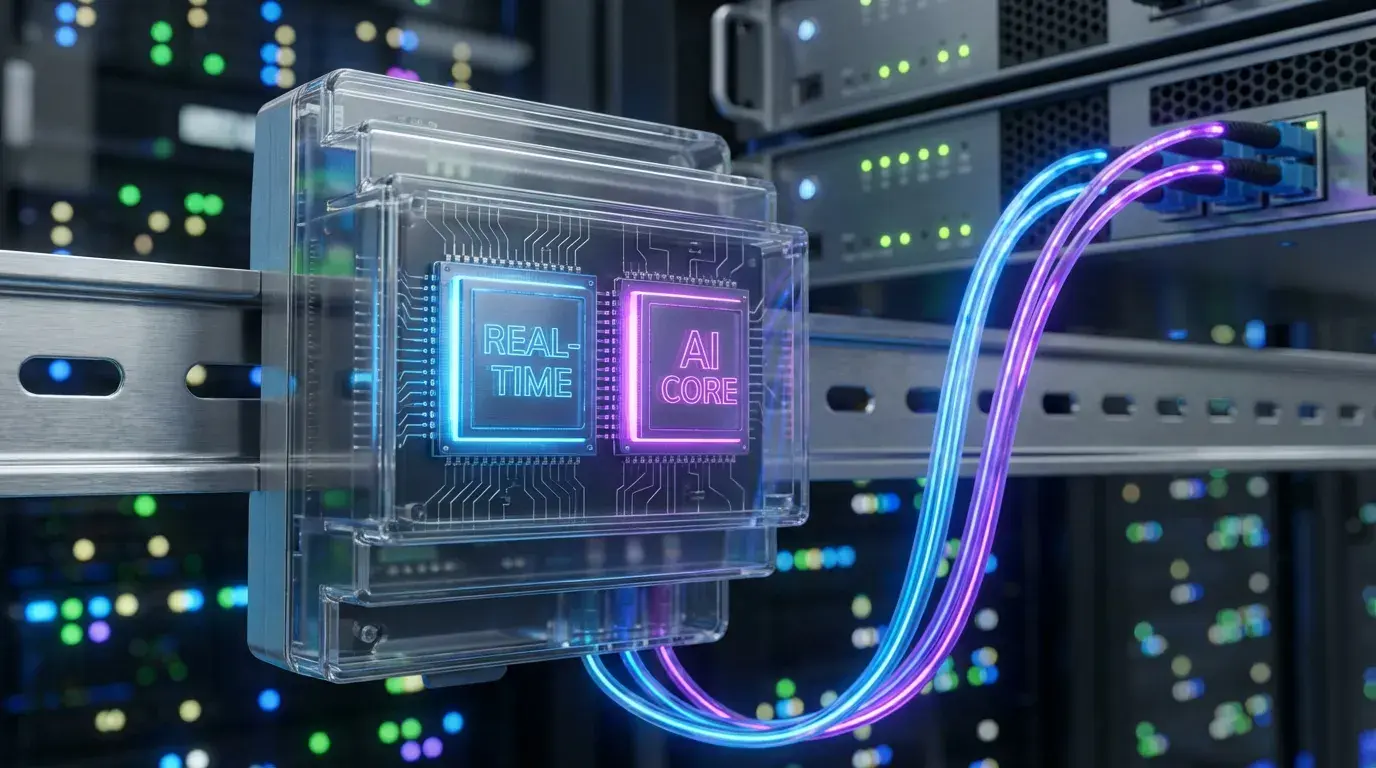
These controllers are hybrids. They have a dual-core or virtualized architecture:
Real-Time World (OT)
A dedicated core. It runs deterministic control logic (IEC 61131) and makes sure the machine stops within milliseconds if someone crosses the safety light curtain.
General-Purpose World (IT)
An open Linux operating system. It runs Docker, Python, Node.js, databases and cloud clients, and handles connectivity and data.
New Programming Paradigms #
With these controllers, automation engineers get superpowers:
- Python for analytics: You can run a Python script inside the PLC that analyzes the servo's current trend and predicts failures using libraries such as SciPy or TensorFlow Lite.
- Docker for applications: Deploy an InfluxDB database, a Mosquitto MQTT broker and a Grafana dashboard DIRECTLY inside the PLC, all in isolated containers that are easy to update.
- Node-RED for integration: Build visual flows to connect the PLC to SAP, Azure or AWS, or send alerts by Telegram or email, without writing a line of complex code.
Hardware-Software Decoupling (IEC 61499) #
The next evolutionary step is the IEC 61499 standard (championed by UniversalAutomation.org). Its goal is fully portable automation software, like an Android app that runs on any phone.
Imagine writing your "Water Tank" control logic once and deploying that same "software block" on a Siemens PLC, a Raspberry Pi or a Schneider server, interchangeably. That's the future.
Conclusion #
The automation engineer of the future will be a hybrid: fluent in PID and Ladder, but also in Linux, IP networking and Docker. The PLC isn't dying; it is turning into a smart industrial server.
Topics
- plc vs edge
- hybrid controllers
- edge controller
- plcnext
- opto22
- industrial automation software
- plc programming
- scada systems

About the author
Sebastián CarrilloLead Hardware Engineer
Translates code into tightened screws. Leads on-site installations and designs iGromi's industrial gateways, solving problems where dust and vibration come into play.