Data logger · In-plant recording
Industrial data logger: what it is and how to choose one
Each point is a time-stamped reading.
What it is
From sensor to history: how a data logger records
It reads a signal, time-stamps it, stores it and delivers it. What separates a good one from one that gets in the way is what it does when something fails: a sensor that stops reporting, a network outage or a clock that drifts.
Types
Three types of data logger and when each one fits
Standalone with memory
How it works
Best for
Watch out for
Connected
How it works
Best for
Watch out for
Industrial computer in the plant
How it works
Best for
Watch out for
| Type | How it works | Best for | Watch out for |
|---|---|---|---|
| Standalone with memory | Records on the device and is downloaded via USB or on site | An isolated point; one-off audits | Data is seen late, when someone downloads it |
| Connected | Records and transmits over Wi-Fi, cellular or LoRa to a platform | Cold rooms, rooms, scattered sites | Depends on coverage; needs a sensor-down alert |
| Industrial computer in the plant | Reads PLCs, meters and sensors, records everything on the same clock and publishes | Several variables on a line or a plant | Requires installing and maintaining a device |
What to record
Which variables to record in a plant
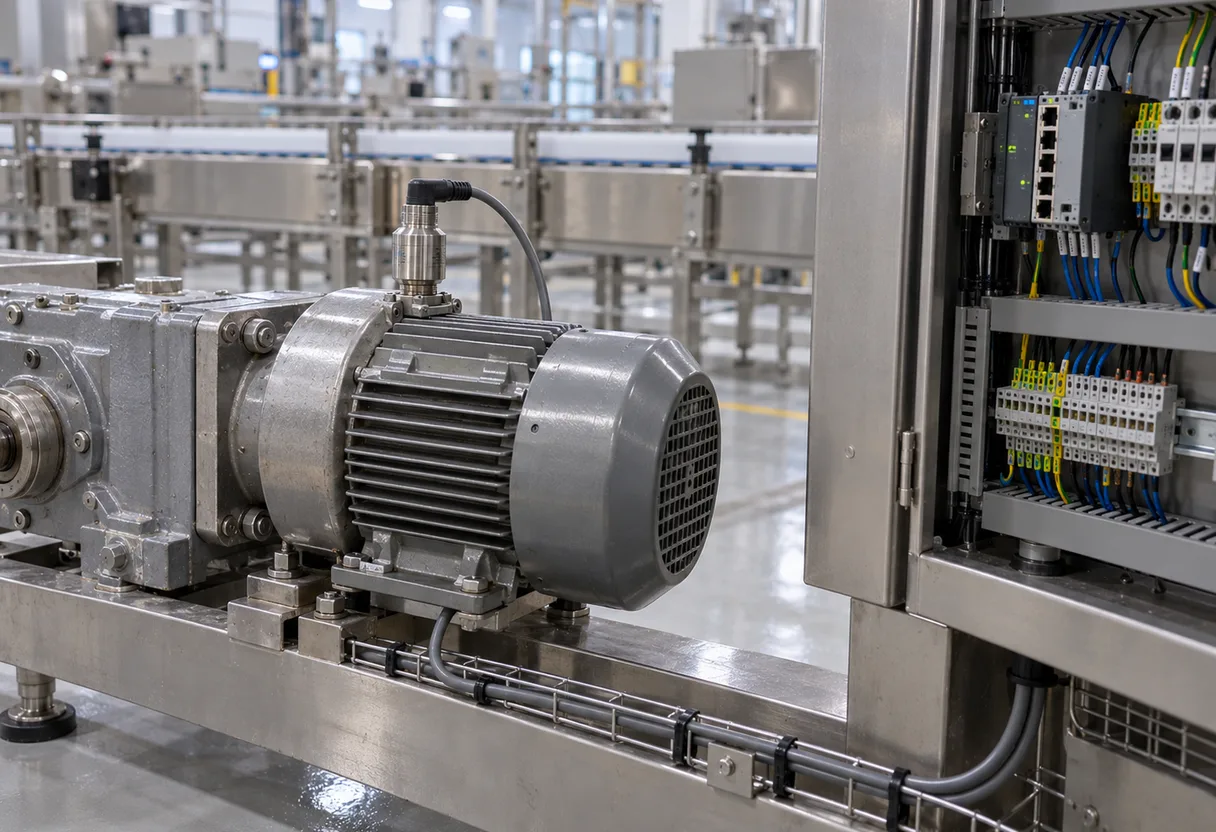
Temperature
Cold rooms, tunnels, ovens and incubators. The most requested in a food audit.
How to choose
Six criteria for choosing an industrial data logger
The datasheet answers half. The other half is proven in your plant.
Sampling rate
What to look at
In practice
Accuracy and calibration
What to look at
In practice
Reliable time
What to look at
In practice
Offline operation
What to look at
In practice
Sensor-down alert
What to look at
In practice
Export
What to look at
In practice
| Criterion | What to look at | In practice |
|---|---|---|
| Sampling rate | How often it reads. A blast freezer tunnel needs seconds; a warehouse, minutes | Ditzler: one reading per second |
| Accuracy and calibration | The datasheet states an accuracy; checking against a reference tells you the real one | Ditzler: 0.0 °C at −24.5 °C against reference |
| Reliable time | Every reading with a synchronized timestamp; without it, nothing can be matched to production | Network time on every record |
| Offline operation | It must store locally and send what is pending when the network is back | An outage leaves no gaps |
| Sensor-down alert | Knowing when a sensor stopped reporting, rather than finding out at the audit | Automatic alert for a sensor with no data |
| Export | Spreadsheet, PDF or API, for the period and point the auditor asks for | Online, exportable history |
Proof
Ditzler: IQF temperature checked against a reference

0.0 °C
difference from reference at −24.5 °C
0.05 °C
difference from reference at 21 °C
1 s
one reading per second
2024
customer since October
Ditzler Chile records its IQF tunnel every second. The probe was checked against a reference calibrator at the same point, and the reference certificate was delivered to the customer.
With iGromi
An industrial computer in the plant that records everything on the same clock
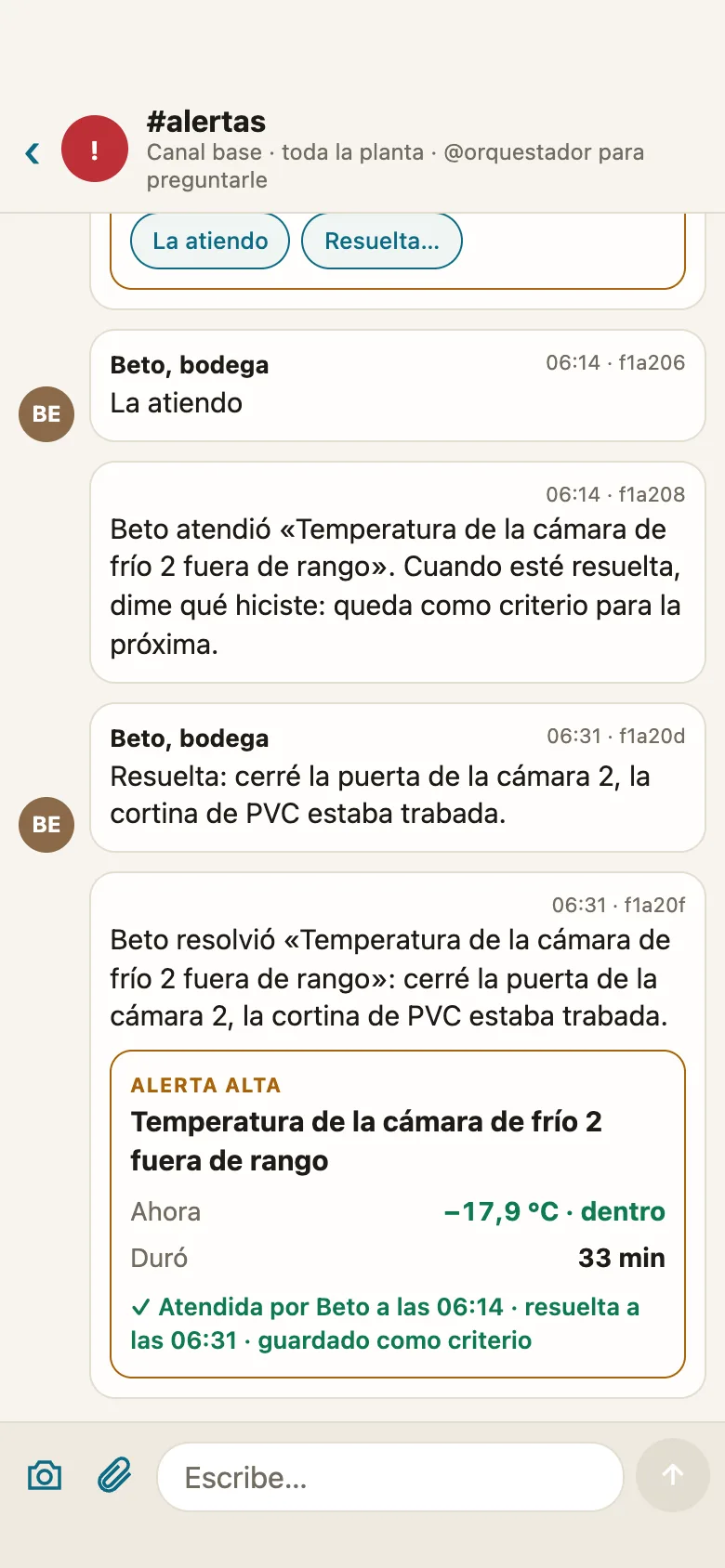
Instead of one recorder per variable, the iGromi edge reads sensors, meters and the PLC read-only, and stores every reading on the same clock. That way temperature, energy and production line up without reconciling spreadsheets.
- Keeps recording offline and sends what is pending later
- Alerts when a sensor stops reporting
- History in the app, in emailed reports and via API
- Does not touch the PLC logic
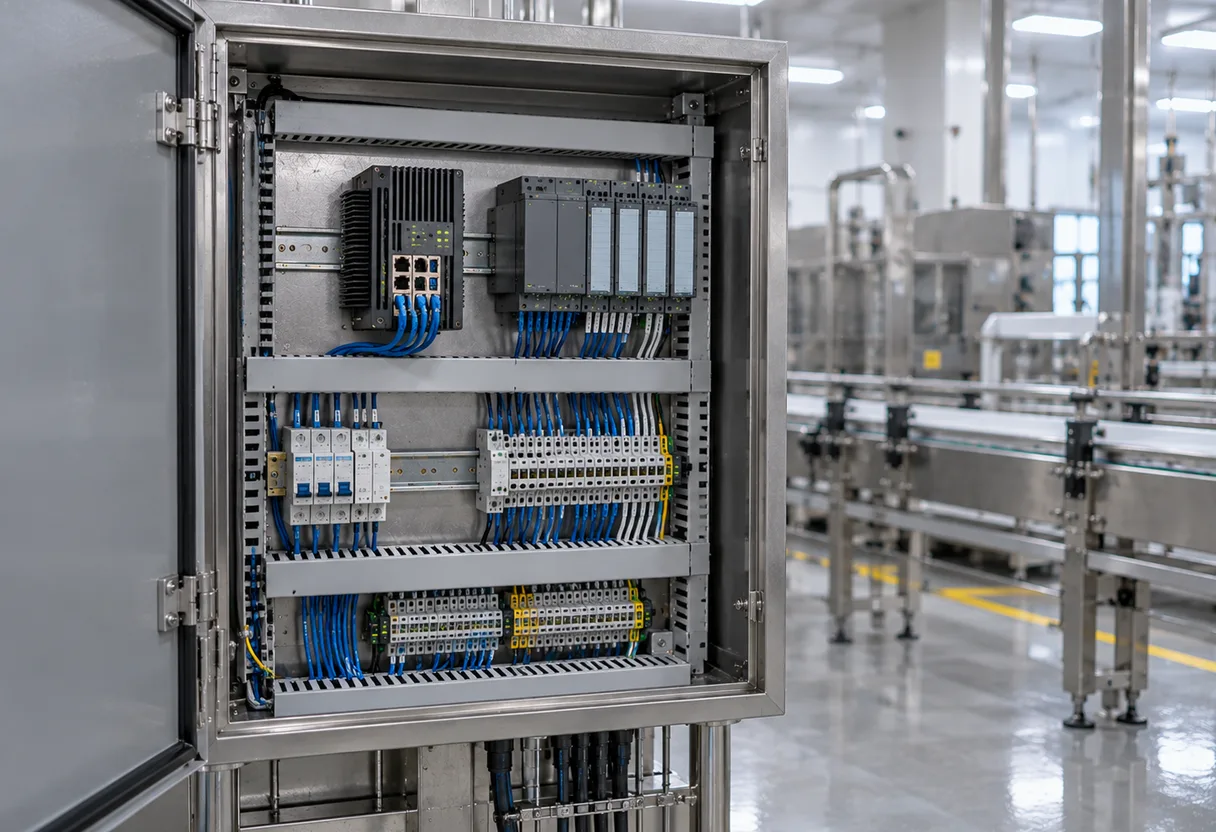
In the app
When a reading goes out of range, it alerts whoever handles it
The alert reaches the plant channel with the reading and the threshold. A person takes it, resolves it and records the cause: the next shift knows what happened.
The app is free during early access. Reading sensors and PLCs requires the edge in the plant.
Your data
Where the records are kept
iGromi cloud, separated per company
The shift app: chat, photo and voice records, and AI that answers with its source.
A private, isolated cloud for your company
Adds SAP, ERP and spreadsheets. The AI model runs inside that cloud.
Inside your plant, on Edge or on-premise
Adds PLCs, sensors and cameras. The Edge reads the PLC read-only and keeps measuring offline.
FAQ
Industrial data logger FAQ
What is an industrial data logger?
What is the difference between a data logger and a PLC?
How often should a data logger record?
How do I know if the data logger measures correctly?
What happens if the internet goes down?
Is an Arduino data logger good enough for a plant?
Does iGromi sell data loggers?
Keep reading
Related guides and cases
Every shift without a record is data you lose. Start free.
- 1Request early access, free
- 2Pick your trade: maintenance, production or safety
- 3Your team starts with the chat and its trade helper
No credit card. Your data stays yours.