Guide · Occupational safety and health
Cause tree analysis accident investigation step by step
Informational guide, not legal advice. Check the current regulation at Ley Chile (Chile's official law library) and consult your safety professional or your mutual insurer (mutualidad).
Start from the last fact: the injury. It is the only one known for certain.
The method
How to build a cause tree
Chain
Conjunction
Disjunction
Independent
The ISP guide does it in three stages: gather the information, build the tree and manage what comes out of it.
- 1. A third-person narrative, step by step, with no assumptions or judgments.
- 2. The list of facts, numbered in chronological order.
- 3. From the injury: what was needed? Was another fact required? Until there is no answer.
- 4. Each root cause with its corrective and preventive control.
The example
From the tree to controls: one per root cause
A made-up example of a slicer in a food plant. The controls target the causes at the far left, not the injury.
Order behind: the line is not stopped
Control
No cleaning tool at the station
Control
Maintenance with no close-out checklist
Control
| Root cause | Control |
|---|---|
| Order behind: the line is not stopped | Slicer cleaning is scheduled with the line stopped and does not depend on how far behind the day is. |
| No cleaning tool at the station | A cleaning tool fixed at the station, included in the daily inspection. |
| Maintenance with no close-out checklist | A close-out checklist that verifies the guards before the machine is released, signed by whoever receives it. |
After the accident
DIAT report, investigation and records: what the rules require
Medical care
Requirement
Source
DIAT
Requirement
Source
Investigation
Requirement
Source
Serious and fatal
Requirement
Source
Records
Requirement
Source
| Step | Requirement | Source |
|---|---|---|
| Medical care | The injured person is sent immediately to the insurer's medical center (the employer's mutual or the ISL). | DS 101, art. 71 a) |
| DIAT | The employer files the DIAT (Individual Work Accident Report) within 24 hours of learning of the accident. | DS 101, art. 71 b) |
| Investigation | The employer investigates the causes, directly or with the joint health and safety committee, using the methodology set by its insurer. | DS 44, arts. 47 and 71 |
| Serious and fatal | The insurer investigates, and the investigation follows the cause tree methodology. | SUSESO Compendium |
| Records | Place, date and time, people, description, causes and corrective actions for each incident, plus a record of each accident. | DS 44, art. 73 |
In the app
How the app tracks incidents and their controls
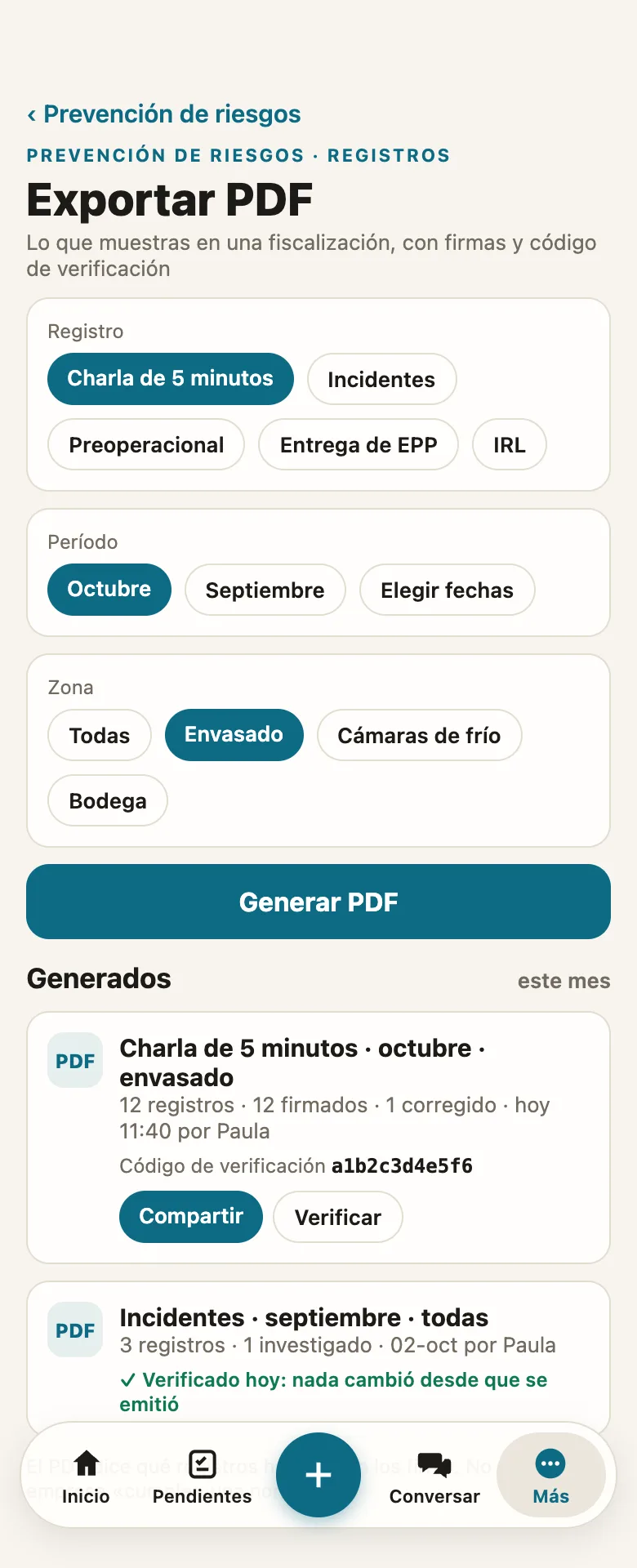
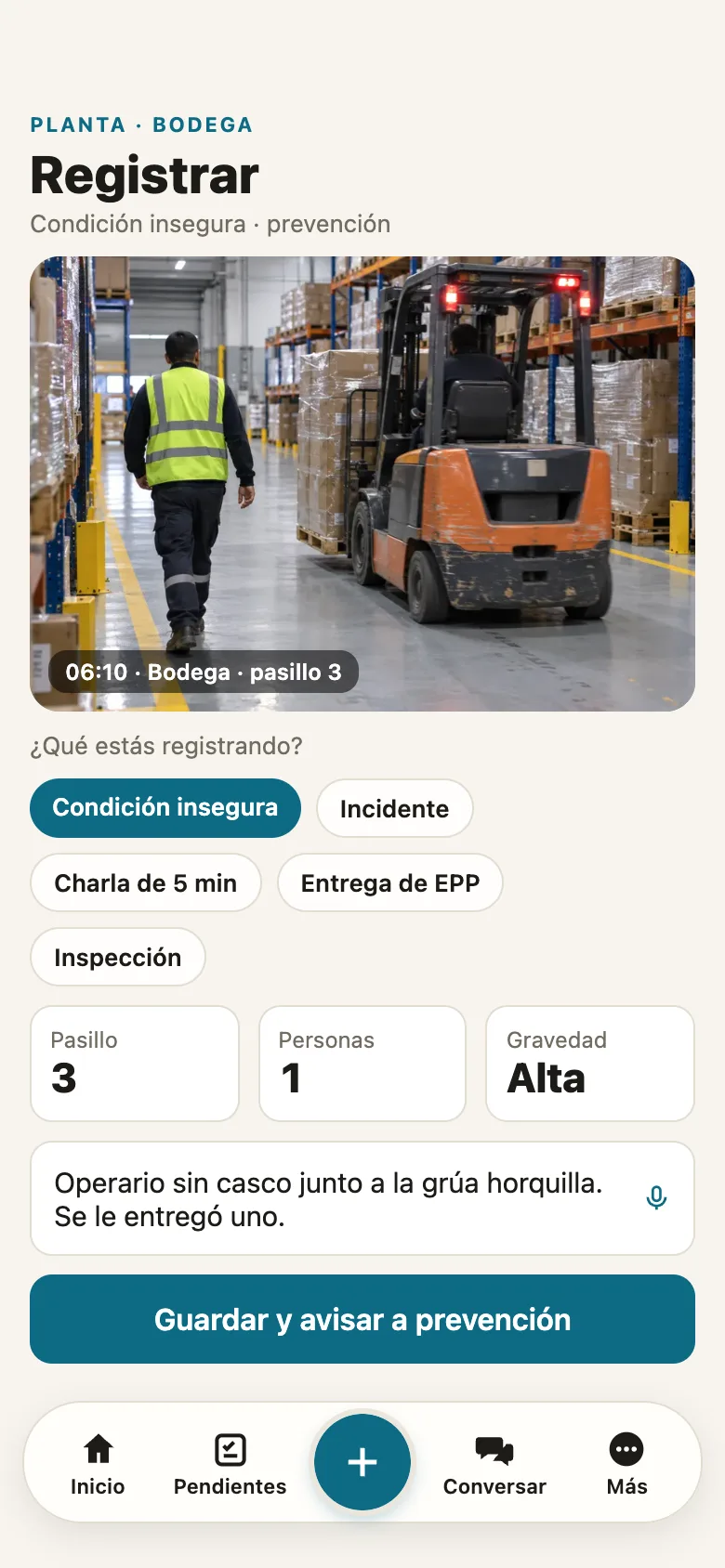
The incident is logged on the spot, controls get an owner and a deadline, and the period comes out as a signed PDF.
Frequently asked questions
Cause tree analysis FAQ
What is the cause tree method?
Is the cause tree method mandatory?
What is the DIAT and what is its deadline?
What is the difference between a conjunction and a disjunction?
Who investigates an accident at the company?
What goes in the accident narrative?
Does the iGromi app log incidents?
Sources: DS 44 (BCN) · DS 101, art. 71 (SUSESO) · SUSESO Compendium, DIAT · SUSESO Compendium, serious and fatal accidents · ISP, accident investigation guide. Reviewed on November 1, 2026.
Keep reading
Occupational health and safety guides
Every shift without a record is data you lose. Start free.
- 1Request early access, free
- 2Pick your trade: maintenance, production or safety
- 3Your team starts with the chat and its trade helper
No credit card. Your data stays yours.